 Edu_Admin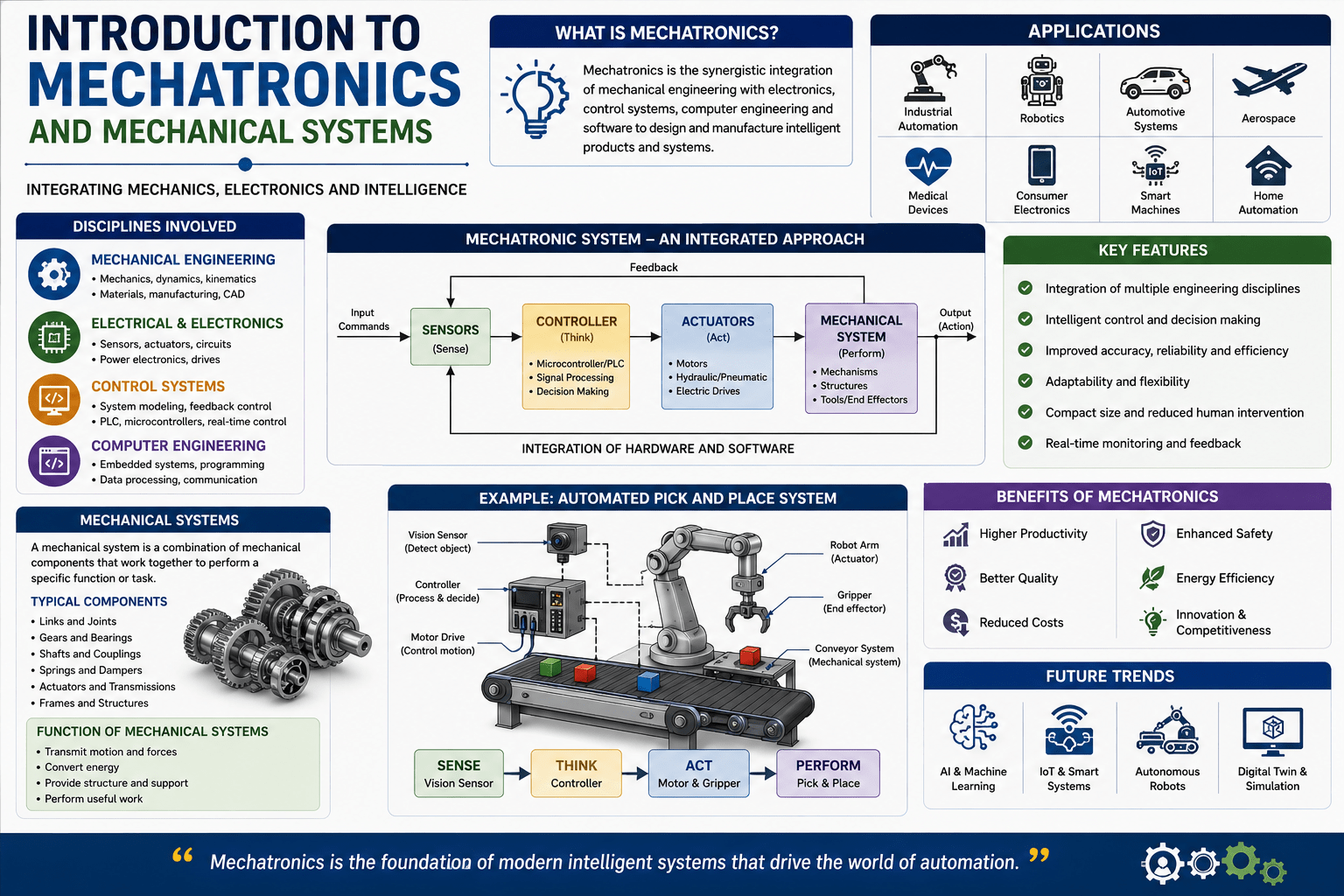
Introduction
The world around us is becoming increasingly intelligent. The car that brakes automatically when it detects an obstacle, the robotic arm that assembles products with precision, the drone that delivers packages—these are not just mechanical systems. They are mechatronic systems. They are the result of a profound integration of mechanical engineering, electronics, and computer science.
Mechatronics is a rapidly evolving field with substantial global economic significance, boasting a market size projected to reach $40.7 billion by 2026. It is the discipline that designs smarter, more economical, reliable, and versatile systems based on the principles of mechanics, electronics, and computing. A mechatronics system is composed of mechanical parts, electric devices, electronics components, sensors, and hardware, operated and controlled through software.
Yet for many engineering students and professionals, mechatronics can seem like a daunting intersection of multiple disciplines. The terminology spans mechanical, electrical, and software engineering. The concepts range from fundamental mechanics to advanced control theory. Where does one even begin?
This is where a structured, foundational course becomes invaluable. The Introduction to Mechatronics and Mechanical Systems course is designed precisely for this purpose. With 1 hour 48 minutes of focused content across 9 lectures and 4 chapters, this course provides a comprehensive understanding of the intricate synergy between mechanical engineering and electronic systems.
This guide provides a comprehensive overview of what mechatronics is, why it matters, what the course covers, the career opportunities it unlocks, and how you can begin your journey toward becoming a mechatronics professional.
What Is Mechatronics?
Mechatronics is a concept that originated in Japan in the 1970s and can be defined as the application of electronics and computer technology to control the motions of mechanical systems. It is the synergistic integration of mechanical engineering, electronics, control engineering, and computer science for the design of intelligent systems.
The Core Idea
At its heart, mechatronics is about creating systems that are more than the sum of their parts. By combining mechanical structures, electronic components, and embedded control software, mechatronic systems achieve performance that no single discipline alone could deliver. These fields influence each other mutually, resulting in products that are smarter, more efficient, and more capable.
The Disciplines of Mechatronics
Mechatronics draws upon and integrates four core disciplines:
- Mechanical Engineering: The physical structure, mechanisms, and means of generating or resisting force and motion
- Electronics: Sensors, actuators, power electronics, and signal conditioning
- Control Engineering: Feedback systems, PID controllers, and automation strategies
- Computer Science: Embedded systems, microcontrollers, programming, and software
What Makes a System Mechatronic?
A system is mechatronic when it tightly integrates these disciplines to perform functions that would be difficult or impossible with mechanical components alone. Key characteristics include:
- Embedded intelligence: The system can make decisions and respond to its environment
- Sensor feedback: The system monitors its own performance and adjusts accordingly
- Actuation: The system can effect physical changes based on electronic commands
- Programmability: The system’s behaviour can be modified through software
Why Mechatronics Matters
The Growing Demand for Mechatronic Systems
Mechatronics is a rapidly evolving field with substantial global economic significance. As industries increasingly adopt automation, robotics, and smart technologies, the demand for mechatronic systems continues to grow.
Applications Across Industries
Mechatronics is not confined to a single sector. Participants in this field will explore real-world applications across diverse industries, from manufacturing and automotive engineering to aerospace and robotics.
- Manufacturing: Robotic arms, automated assembly lines, quality control systems
- Automotive: Anti-lock braking systems, electronic stability control, autonomous driving
- Aerospace: Flight control systems, unmanned aerial vehicles, satellite systems
- Robotics: Industrial robots, service robots, collaborative robots
- Healthcare: Surgical robots, prosthetics, diagnostic equipment
- Consumer Electronics: Smart appliances, wearable devices, home automation
The Multidisciplinary Advantage
Mechatronics engineers possess a unique combination of skills across multiple disciplines. This versatility makes them highly valuable in the job market and enables them to work on complex, integrated systems that single-discipline engineers cannot.
What the Course Covers
The Introduction to Mechatronics and Mechanical Systems course is a meticulously curated program tailored to provide a comprehensive understanding of the intricate synergy between mechanical engineering and electronic systems.
Course Overview
| Feature | Detail |
|---|---|
| Total Duration | 1 hour 48 minutes |
| Number of Lectures | 9 lectures |
| Number of Chapters | 4 chapters |
| Language | English |
| Student Enrollment | 946+ students |
| Instructor | Dhruv Hegde |
| Last Updated | May 2024 |
What You Will Learn
Mechanical Components in Engineering Systems
You will learn about the mechanical components that form the physical foundation of mechatronic systems. This includes understanding how mechanical elements interact with electronic components to create integrated systems.
Component Selection Criteria
You will learn to choose appropriate components through selection criteria. This is an essential skill for designing effective mechatronic systems that balance performance, cost, and reliability.
Visual Pipeline for Mechatronic Systems
You will develop a visual pipeline for mechatronic systems, enabling you to understand how information flows through the system from sensors to controllers to actuators.
Actuation Mechanisms and Converting Forces
You will understand actuation mechanisms and how forces are converted into motion. This is fundamental to understanding how mechatronic systems interact with the physical world.
Programmable Logic Controllers (PLCs)
You will be introduced to Programmable Logic Controllers, the industrial computers that automate many mechatronic systems.
Sensor Technology
You will learn about the sensors that allow mechatronic systems to perceive their environment.
Control Strategies
You will understand the control strategies that enable mechatronic systems to respond intelligently to their environment.
Course Structure
The course is organised into four chapters with nine lectures:
- Introduction to Mechatronics (15:12)
- Microcontrollers and Embedded Systems (14:03)
- Additional lectures covering sensors, actuators, PLCs, and control strategies
The curriculum encompasses a series of meticulously crafted lectures, supplemented by practical demonstrations and hands-on exercises.
Enrol in Introduction to Mechatronics and Mechanical Systems Now
Who Should Take This Course
Engineering Students
Students interested in pursuing engineering will find this course a major stepping stone towards moving forward in their studies. It provides a foundational understanding of mechatronics that complements academic coursework.
Mechanical Engineers
Mechanical engineers who want to understand the electronic and control aspects of modern systems will gain essential knowledge for integrating electronics into their designs.
Electronics and Electrical Engineers
Engineers from electronics backgrounds who want to understand the mechanical systems their components control will benefit from this multidisciplinary perspective.
Aspiring Robotics and Automation Professionals
Those pursuing careers in robotics, automation, or control systems will find this course an ideal starting point.
Beginners to Intermediate Learners
The course is designed for beginner to intermediate students interested in engineering. It starts from the fundamentals and builds systematically.
Career Changers
Professionals looking to transition into the rapidly growing field of mechatronics will gain the foundational knowledge they need.
Requirements
The course has modest requirements:
- Basic understanding of engineering, programming, and mathematics to get full utility from this course
No advanced experience is required. The course is designed to be accessible while providing substantial value.
Career Opportunities in Mechatronics
Mechatronics engineering opens doors to a wide range of career opportunities across multiple industries.
Common Roles
According to job sources, common roles include:
- Mechatronics Technician
- Robotics Engineer
- Automation Engineer
- Instrumentation Engineer
- Control Systems Engineer
- Systems Integration Engineer
- Embedded Systems Developer
Industries and Sectors
Mechatronics engineers are employed across:
- Automotive: Designing automated systems and robotics for vehicle manufacturing and autonomous systems
- Aerospace: Flight control systems, unmanned aerial vehicles
- Healthcare: Surgical robots, prosthetics, medical devices
- Manufacturing: Process automation, robotic systems, quality control
- Consumer Electronics: Smart devices, home automation
Why Mechatronics Engineers Are in Demand
Mechatronics engineers are highly sought-after on the job market. Their ability to work across mechanical, electronic, and software disciplines makes them uniquely qualified to design and implement the integrated systems that modern industry demands. The end product of a mechatronics engineer’s work is a working prototype of an embedded computer-controlled electro-mechanical device or system.
Frequently Asked Questions
What is mechatronics?
Mechatronics is the synergistic integration of mechanical engineering, electronics, control engineering, and computer science. It is the application of electronics and computer technology to control the motions of mechanical systems.
What is the difference between mechanical engineering and mechatronics?
Mechanical engineering focuses on mechanical systems, structures, and motion. Mechatronics integrates mechanical engineering with electronics, control systems, and software to create intelligent, automated systems.
Do I need prior experience to take this course?
A basic understanding of engineering, programming, and mathematics is recommended. The course is designed for beginner to intermediate students.
How long is the course?
The course includes 1 hour 48 minutes of video content across 9 lectures and 4 chapters.
What topics are covered in this course?
The course covers mechanical components, component selection criteria, visual pipeline development for mechatronic systems, actuation mechanisms, PLCs, sensor technology, and control strategies.
What career opportunities does this course prepare me for?
This course prepares you for roles including Mechatronics Technician, Robotics Engineer, Automation Engineer, Control Systems Engineer, and Systems Integration Engineer.
Which course should I choose for learning mechatronics?
A course that provides a comprehensive understanding of the synergy between mechanical engineering and electronic systems is ideal. The Introduction to Mechatronics and Mechanical Systems course provides exactly this foundational training.
Mastering Mechatronics: Your Next Step
Mechatronics is one of the most exciting and rapidly growing fields in engineering. It is the discipline that designs the intelligent systems of the future—from autonomous vehicles to robotic surgery to smart manufacturing. The integration of mechanical systems with electronics and control software is not just a trend; it is the direction in which all of engineering is moving.
Learning mechatronics presents a choice. You can struggle through fragmented resources and confusing terminology. Or you can take a structured course that provides a comprehensive understanding of the synergy between mechanical engineering and electronic systems.
The Introduction to Mechatronics and Mechanical Systems course provides exactly this structured approach. With 1 hour 48 minutes of focused instruction across 9 lectures, you will develop the skills to:
- Understand mechanical components in engineering systems
- Choose appropriate components through selection criteria
- Develop a visual pipeline for mechatronic systems
- Understand actuation mechanisms and force conversion
- Gain foundational knowledge of PLCs, sensors, and control strategies
- Build a strong foundation for further study or career entry
The course starts from the fundamentals and is accessible to beginners.
Enrol in Introduction to Mechatronics and Mechanical Systems Now
Recommended Related Courses
To build a comprehensive mechatronics and mechanical engineering skillset, consider these additional courses:
Learn the Fundamentals of Mechanical Engineering – Broaden your understanding of mechanical engineering fundamentals.
Mechanics / Statics – Introduction to Mechanical Engineering – Build foundational mechanics knowledge essential for mechatronics.
Python for Mechanical Engineers – Develop programming skills applicable to mechatronic systems.
Micro-Electromechanical Systems (MEMS) Technology – Explore the intersection of mechanical and electronic systems at the microscale.
Mechanical concept design : Stress simulation in Fusion 360 – Learn stress simulation to validate mechanical designs in mechatronic systems.
Introduction to Mechatronics and Mechanical Systems – The complete course for mastering the integration of mechanical systems with electronics.
Final Thoughts
Mechatronics is not just a field of study—it is the future of engineering. The integration of mechanical systems with electronics and software is transforming every industry, from manufacturing to healthcare to transportation. The engineers who understand this integration will be the ones who design the intelligent systems of tomorrow.
The Introduction to Mechatronics and Mechanical Systems course provides the structured, accessible introduction you need to begin your journey into this exciting field. With 1 hour 48 minutes of expert instruction, it is the ideal starting point for anyone interested in the integration of mechanical and electronic systems.
Start your mechatronics journey today.
Enrol in Introduction to Mechatronics and Mechanical Systems
About the Author