 Edu_Admin
Introduction
You have spent years studying thermodynamics, fluid mechanics, and machine design. You have solved countless equations, completed demanding projects, and earned your degree. But when you step into the real world, you realise that passing exams and landing your first core industry job are two completely different challenges.
The truth is that in today’s competitive market, having a degree is not enough. Employers are looking for candidates who possess hands-on understanding of field expectations, relevant certifications, and job-ready skills. They want engineers who can walk onto a site and contribute from day one—not graduates who need months of additional training.
This gap between academic knowledge and industry requirements is where many mechanical engineers struggle. They have the theoretical foundation but lack the practical understanding of how real-world mechanical engineering roles work—from site responsibilities to quality assurance and project documentation.
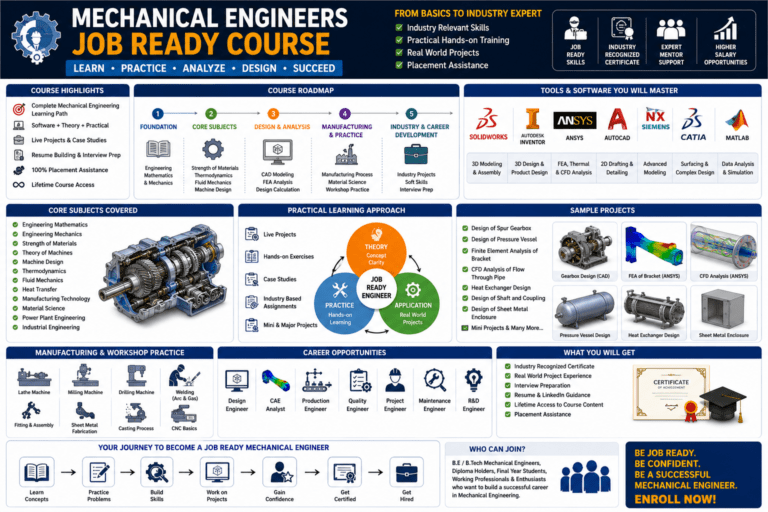
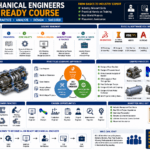
The Career Kickstart: Mechanical Engineers Job Ready course bridges this gap. Designed specifically for mechanical engineers and diploma holders who want to build a successful career in QA/QC, NDT, oil & gas, inspection, and fabrication industries, this course provides the clarity and preparation strategy you need to stand out from the competition.
This guide provides a comprehensive overview of how to become job-ready as a mechanical engineer, what the course covers, why these skills matter for your career, and how you can begin your journey toward landing your first core industry job.
The Mechanical Engineering Job Market in 2026
Industry Demand
The future job prospect for mechanical engineers is expected to grow by nearly 10 percent in the next decade, which is as good as any other occupation. There is a demand for mechanical engineers in almost every industry and on different types of projects. The demand for trained mechanical engineers has not been higher in a generation.
However, the work environment has evolved significantly. Robotics, automation, EV manufacturing, and Industry 4.0 have pushed mechanical engineers to learn digital tools and simulation software. Employers increasingly prioritise practical skills over just a degree.
The Skills Employers Are Looking For
According to industry research, mechanical engineers need a combination of technical and soft skills to succeed:
Technical Skills:
- Strong foundation in mechanics, materials, and manufacturing processes
- CAD proficiency (SolidWorks, AutoCAD, CATIA)
- CAE skills (ANSYS, Simulia ABAQUS)
- Understanding of thermodynamics and manufacturing basics
Soft Skills:
- Active listening and critical thinking
- Problem-solving using mathematics and scientific rules
- Creativity and reading comprehension
- Strong communication and teamwork abilities
Specialised Industry Skills:
- QA/QC (Quality Assurance / Quality Control)
- NDT (Non-Destructive Testing) methods
- ASME, ISO, and API code awareness
- Certification knowledge (ASNT, CSWIP, API)
Where Mechanical Engineers Work
Most mechanical engineers start in one of four roles: design engineer (creating technical specifications), project engineer (coordinating teams), or roles in manufacturing and quality assurance. The specific branch you choose within mechanical engineering defines your career trajectory.
The Challenge: From Student to Professional
The Degree Gap
A Bachelor’s degree in Mechanical Engineering builds strong, foundational knowledge and skills in math, physics, thermodynamics, fluid mechanics, and materials science. However, many graduates find that academic knowledge alone does not prepare them for the practical demands of industry.
What Employers Actually Want
Recruiters look for practical skills—coding, design, analytics, tools—over just a degree. They want engineers who can demonstrate:
- Understanding of real-world field expectations
- Knowledge of industry certifications and standards
- Ability to prepare a compelling technical resume
- Confidence in technical interviews
The Solution: Targeted Career Preparation
The Career Kickstart: Mechanical Engineers Job Ready course addresses this gap directly. It provides the practical knowledge and preparation strategy that academic programs often overlook.
What the Course Covers
The Career Kickstart: Mechanical Engineers Job Ready course is designed specifically for mechanical engineers and diploma holders who want to build a successful career in QA/QC, NDT, oil & gas, inspection, and fabrication industries.
Course Overview
| Feature | Detail |
|---|---|
| Platform | Udemy |
| Estimated Duration | 10-20 hours |
| Skill Level | Intermediate – some prior knowledge recommended |
| Language | English |
| Format | Online, Self-Paced |
| Access | Lifetime access |
| Certificate | Upon completion |
What You Will Learn
Real-World Role Understanding
You will gain insights into how real-world mechanical engineering roles work—right from site responsibilities to quality assurance and project documentation. This is not abstract theory; it is practical knowledge you can apply immediately.
Technical Resume Preparation
You will learn how to prepare an impressive technical resume that gets noticed by employers. A well-crafted resume is essential for standing out in a competitive job market.
Essential Certifications
You will gain clarity on essential certifications like ASNT, CSWIP, API. These certifications are highly valued in the oil & gas, inspection, and fabrication industries.
Industry Code Awareness
You will develop awareness of industry codes including ASME, ISO, and API. Understanding these codes is essential for quality assurance and inspection roles.
Interview Preparation
You will receive guidance on interview questions, HR round preparation, and how to walk into interviews confident and capable.
Job Opportunity Alignment
You will learn how to align your skills with Gulf and India-based job opportunities. The course covers targeting inspection jobs, fabrication plants, piping QC roles, and offshore project work.
Enrol in Career Kickstart: Mechanical Engineers Job Ready Now
Why This Course Is Different
Designed for Real-World Success
This course is not a theoretical overview. It is a practical, career-focused program that bridges the gap between academic knowledge and industry requirements. It is designed for mechanical engineers and diploma holders who want to build a successful career in QA/QC, NDT, oil & gas, inspection, and fabrication industries.
No Prior Experience Required
No prior experience is needed. Whether you are just out of college or preparing for walk-in interviews or online applications, this course will give you a solid start to your career journey.
Industry-Aligned Content
The course covers the specific skills and knowledge that employers in the oil & gas, inspection, and fabrication industries are looking for. This is not general career advice—it is targeted preparation for real opportunities.
Practical Focus
You will gain hands-on understanding of field expectations, certifications, and job-ready skills. The course emphasises practical application over abstract theory.
Who Should Take This Course
Mechanical Engineering Students and Freshers
Students wondering how to land their first core industry job will find this course invaluable. It provides the clarity and preparation strategy needed to transition from academics to employment.
Diploma Holders
Diploma holders in mechanical engineering who want to build a successful career in QA/QC, NDT, oil & gas, inspection, and fabrication industries will benefit from the practical, industry-focused training.
Career Changers
Professionals looking to transition into QA/QC, inspection, or oil & gas roles will gain the foundational knowledge and certification awareness they need.
Job Seekers
Anyone preparing for walk-in interviews or online applications in the mechanical engineering field will gain confidence and capability.
Freelancers and Consultants
Freelancers and consultants working in engineering who want to expand their skills and certifications will benefit from the course content.
Frequently Asked Questions
What is the Career Kickstart: Mechanical Engineers Job Ready course?
This course is designed specifically for mechanical engineers and diploma holders who want to build a successful career in QA/QC, NDT, oil & gas, inspection, and fabrication industries. It covers real-world role understanding, technical resume preparation, essential certifications, industry code awareness, and interview preparation.
Do I need prior experience to take this course?
No. No prior experience is needed. Whether you are just out of college or preparing for walk-in interviews, this course will give you a solid start.
What certifications are covered in this course?
The course covers essential certifications including ASNT, CSWIP, and API. These are highly valued in the oil & gas, inspection, and fabrication industries.
What industries does this course prepare me for?
The course prepares you for careers in QA/QC, NDT, oil & gas, inspection, and fabrication industries. It also covers Gulf and India-based job opportunities.
How long does the course take?
The estimated duration is 10-20 hours. The course is self-paced, so you can complete it at your own speed.
Will I receive a certificate upon completion?
Yes. A certificate of completion is provided upon finishing the course.
What career roles does this course prepare me for?
The course prepares you for roles including QA/QC Engineer, NDT Inspector, Fabrication Engineer, Piping QC Engineer, and Inspection Engineer, particularly in oil & gas and offshore projects.
Building Your Career: A Step-by-Step Approach
Step 1: Understand the Industry
Before you can land a job, you need to understand what the industry actually expects. This means knowing what different roles entail, what certifications are valued, and what employers are looking for.
Step 2: Prepare Your Technical Resume
A well-crafted technical resume is essential for getting noticed. It should highlight not just your academic qualifications but also your practical skills, projects, and any relevant certifications.
Step 3: Gain Certification Awareness
Certifications like ASNT, CSWIP, and API are highly valued in the oil & gas and inspection industries. Understanding what these certifications entail and how to pursue them gives you a significant advantage.
Step 4: Develop Industry Code Knowledge
Awareness of industry codes including ASME, ISO, and API is essential for quality assurance and inspection roles. Employers expect candidates to understand these standards.
Step 5: Prepare for Interviews
Technical interviews in the mechanical engineering field can be demanding. The course covers interview questions and HR round guidance so you walk into interviews confident and capable.
Step 6: Align with Job Opportunities
Understanding how to align your skills with specific job opportunities—whether in Gulf markets or India-based roles—is essential for a successful job search.
Career Pathways for Mechanical Engineers
QA/QC Engineer
Quality Assurance/Quality Control engineers ensure that products and processes meet quality standards. This role requires knowledge of inspection techniques, quality management systems, and industry codes.
NDT Inspector
Non-Destructive Testing inspectors use techniques like ultrasonic testing, radiographic testing, and magnetic particle inspection to detect defects without damaging the component. ASNT certification is highly valued in this field.
Fabrication Engineer
Fabrication engineers oversee the manufacturing of mechanical components and structures. They ensure that fabrication processes meet quality and safety standards.
Piping QC Engineer
Piping QC engineers inspect and verify piping systems in oil & gas and industrial facilities. They ensure compliance with codes like ASME and API.
Inspection Engineer
Inspection engineers verify that equipment and systems meet quality, safety, and regulatory requirements. They work across industries including oil & gas, manufacturing, and construction.
Why Now Is the Time to Invest in Your Career
The Job Market Is Competitive
In today’s competitive market, just having a degree isn’t enough. Employers look for hands-on understanding of field expectations, certifications, and job-ready skills.
Certifications Set You Apart
Certifications like ASNT, CSWIP, and API are highly valued and can significantly improve your job prospects. They demonstrate that you have the specialised knowledge that employers need.
Practical Skills Are in Demand
Recruiters look for practical skills—coding, design, analytics, tools—over just a degree. Demonstrating job-ready skills gives you a competitive edge.
Career Growth Opportunities
Mechanical engineering offers good salary opportunities in both private companies and the government sector. With the right preparation, you can position yourself for long-term career growth.
Mastering Your Career Kickstart: Your Next Step
Transitioning from student to professional mechanical engineer is one of the most important steps in your career. The choices you make now—the skills you develop, the certifications you pursue, the preparation you undertake—will shape your career trajectory for years to come.
The Career Kickstart: Mechanical Engineers Job Ready course provides the comprehensive, practical training you need to succeed. With 10-20 hours of focused instruction, you will develop the skills to:
- Understand how real-world mechanical engineering roles work
- Prepare an impressive technical resume
- Gain clarity on essential certifications including ASNT, CSWIP, and API
- Develop awareness of industry codes including ASME, ISO, and API
- Walk into interviews confident and capable
- Align your skills with Gulf and India-based job opportunities
The course starts from where you are and takes you to where you need to be. No prior experience is required.
Enrol in Career Kickstart: Mechanical Engineers Job Ready Now
Recommended Related Courses
To build a comprehensive career preparation and mechanical engineering skillset, consider these additional courses:
TOP 50 MECHANICAL ENGINEERING INTERVIEW QUESTIONS – Prepare for mechanical engineering interviews with comprehensive question banks and practice tests.
100+ MECHANICAL engineering INTERVIEW questions – More than 100 interview questions and answers from various mechanical engineering subjects.
Mechanical Engineering 101 (From Student to Professional) – Learn about mechanical engineering education, career paths, and university courses from a Mechanical Engineer with over 9 years of experience.
Learn the Fundamentals of Mechanical Engineering – Build the necessary ground knowledge to start or enhance your engineering knowledge for entering the industry.
Pressure Vessel Fabrication – Mechanical Engineering, Oil & Gas – Specialised knowledge for oil & gas fabrication roles.
Mechanical Aspects of Shell and Tube Heat Exchangers – Build foundational knowledge of heat exchangers, critical components in oil and gas processing.
Drilling – Mechanical & Wellbore Geometry Sticking – Understand drilling operations in the oil and gas industry.
Final Thoughts
The journey from mechanical engineering student to professional is one of the most important transitions you will make in your career. It is the moment when your academic knowledge meets the real world. It is the moment when you must demonstrate not just what you know, but what you can do.
The Career Kickstart: Mechanical Engineers Job Ready course provides the practical, industry-focused training you need to bridge the gap between academia and employment. Whether you are targeting QA/QC roles, NDT inspection, oil & gas, or fabrication, this course gives you the clarity and preparation strategy you need to stand out from the competition.
Start your career journey today.
Enrol in Career Kickstart: Mechanical Engineers Job Ready
About the Author