
 Edu_Admin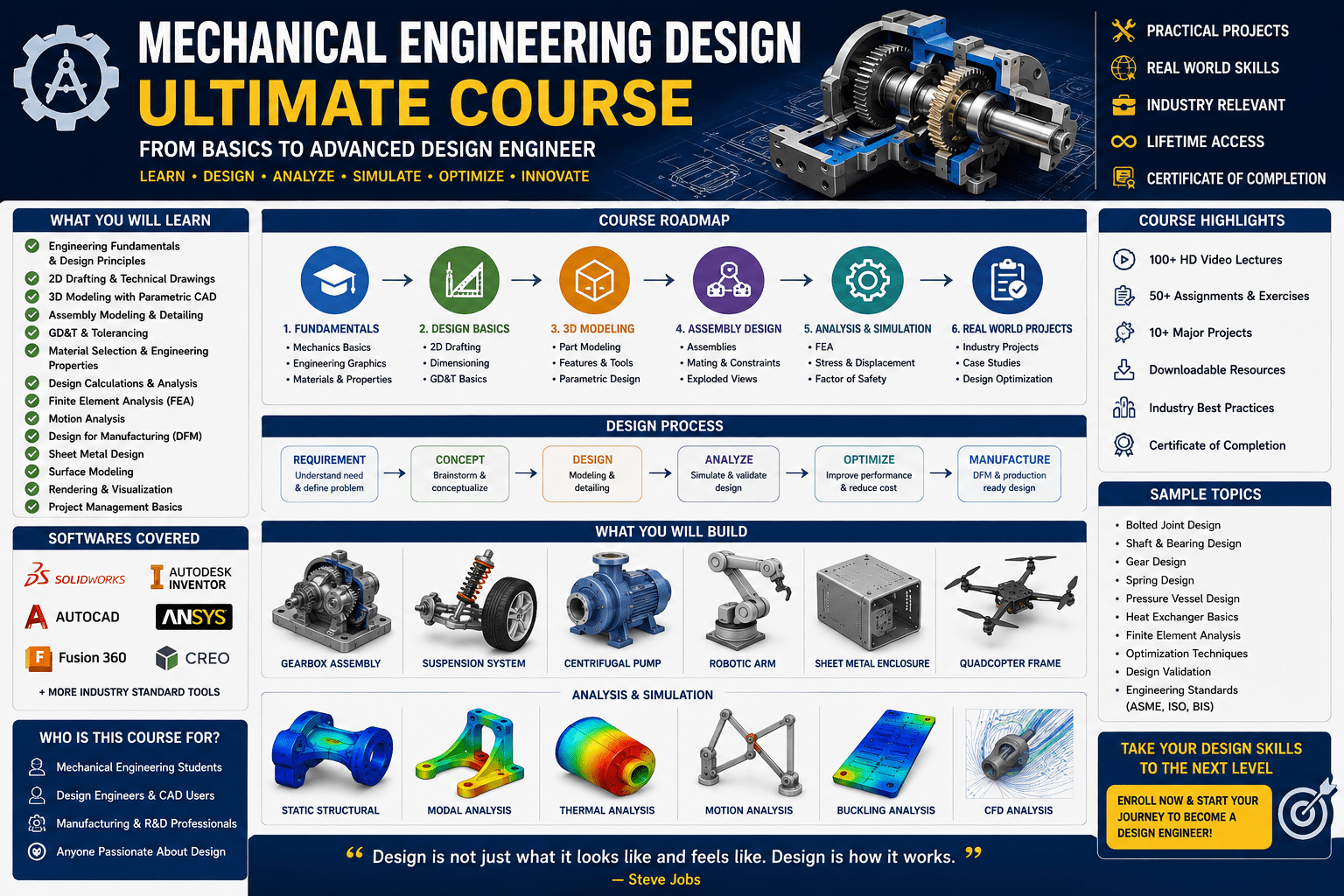
Introduction
Our world is brimming with machinery. From the toaster in your kitchen to the smartphone in your pocket, from agricultural equipment that feeds nations to automobiles that transport millions, from satellites orbiting Earth to medical devices that save lives—our lives are shaped by machines and how they are designed. Regardless of their size or purpose, these machines are precisely designed for specific tasks, relying on essential mechanical elements to function effectively. But have you ever wondered how these machines are conceived, analysed, and brought to life?
Behind every machine is a systematic design process rooted in engineering principles. Mechanical engineering design is the discipline that transforms an idea into a functional, reliable, and manufacturable product. It is the bridge between concept and reality, between a sketch on a whiteboard and a component that can be manufactured, assembled, and used. It is the application of engineering science to create solutions that meet human needs.
Yet for many engineering students and professionals, mechanical design can seem overwhelming. The breadth of topics is vast. The mathematics appears complex. The connection between theory and practice is not always clear. Where does one even begin?
The truth is that mechanical engineering design is a logical, systematic discipline when approached correctly. It follows a clear progression: understanding the theory of design, analysing stresses and materials, applying failure theories, designing specific machine elements, and finally using modern design tools like CAD and FEA. Once you understand this progression, the entire discipline becomes coherent and manageable.
The Mechanical Engineering Design – The Ultimate Course is designed precisely for this purpose. It offers a comprehensive journey through the entire mechanical design process, covering everything from design theory and mechanics of materials to stress analysis, machine element design, and a basic introduction to design tools like Computer Aided Design (CAD) and Finite Element Analysis (FEA). This course provides the theoretical depth and practical tools you need to design components and systems that perform reliably in the real world.
This guide provides a comprehensive overview of what mechanical engineering design entails, why it matters for your career, what the course covers, and how you can begin your journey toward mastering this essential engineering discipline.
What Is Mechanical Engineering Design?
Mechanical engineering design is the process of creating and developing mechanical systems and components. It involves applying engineering principles, materials science, and manufacturing knowledge to design products that are functional, reliable, and manufacturable.
The Core Concept
At its heart, mechanical engineering design is about transforming a need or requirement into a detailed specification that can be manufactured. It is a systematic process that considers not just the function of the product but also its strength, durability, cost, manufacturability, and safety.
The Design Process
The mechanical design process typically follows a structured sequence:
- Problem Definition: Understanding the need and establishing design requirements
- Concept Generation: Developing multiple potential solutions
- Concept Evaluation: Assessing concepts against requirements
- Analysis: Performing stress analysis, material selection, and failure prevention
- Detailed Design: Finalising dimensions, tolerances, and specifications
- Documentation: Creating drawings and specifications for manufacturing
The Three Pillars of Mechanical Design
Mechanical engineering design can be divided into three interconnected areas:
Design Theory and Mechanics of Materials
This is the foundation. It covers the basic theory behind the meaning of design, engineering materials and their behaviour, stress and strain analysis, and failure prevention for both static and dynamic loading.
Design of Machine Elements
This is the practical application. It covers the design of specific mechanical components including rotating shafts, permanent and non-permanent fasteners, rolling bearings, different types of gears, and belt drives.
Design Tools
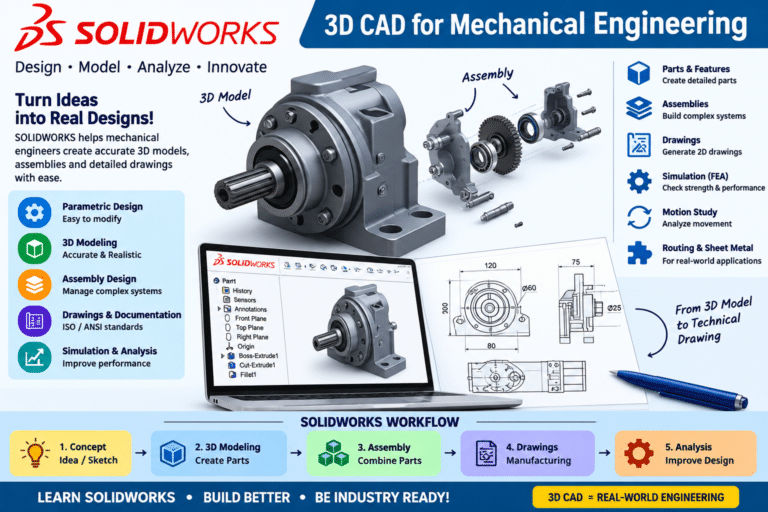
This is the modern practice. It covers the use of Computer Aided Design (CAD) software like SolidWorks and Finite Element Analysis (FEA) tools like ANSYS for designing and analysing mechanical systems.
Why Mechanical Engineering Design Matters
The Foundation of Engineering Practice
Mechanical engineering design is the application of engineering knowledge to create real products. It is where all the theoretical knowledge from mathematics, physics, and materials science comes together to produce something tangible. Without design, engineering would remain purely academic.
Career Opportunities
Mechanical engineering design skills open doors to a wide range of roles including:
- Design Engineer
- Mechanical Design Engineer
- Product Development Engineer
- Machine Design Engineer
- CAD Designer
- Simulation Engineer
- R&D Engineer
Professional Competence
For practicing engineers, a solid understanding of design theory and practice is essential for professional competence. As one course description notes, this course is ideal for “Mechanical Engineers looking to refresh their theory behind mechanical design”. In a rapidly evolving field, continuous learning is not optional—it is essential.
Innovation and Creativity
Mechanical design is where creativity meets engineering. It is the discipline that enables engineers to solve problems in new and innovative ways, creating products that improve lives and drive progress.
Industry Demand
Across industries—automotive, aerospace, manufacturing, energy, consumer products, medical devices—design engineers are in high demand. The ability to design reliable, efficient, and manufacturable products is a skill that employers actively seek and value.
What the Course Covers
The Mechanical Engineering Design – The Ultimate Course is a comprehensive program designed to take you through the entire mechanical design process.
Course Overview
| Feature | Detail |
|---|---|
| Total Duration | 19 hours 21 minutes |
| Number of Lectures | 82 lectures |
| Number of Chapters | 15 chapters |
| Language | English |
| Student Enrollment | 1,754+ students |
| Last Updated | December 2024 |
Part 1: Design Theory and Mechanics of Materials
The first part of the course covers the foundational theory that underpins all mechanical design.
Basics of Mechanical Design Engineering
You will learn the basic theory behind the meaning of design and mechanical design. This includes understanding the design process, the role of the design engineer, and the systematic approach to creating mechanical solutions.
Engineering Materials
You will learn the theory of engineering materials and how they behave in certain situations. This includes understanding material properties, selection criteria, and the relationship between material behaviour and design decisions.
Stress Analysis
You will learn the theory and process of conducting stress and strain analysis. This is fundamental to ensuring that designs can withstand the loads they will encounter in service.
Failure Prevention for Static Loading
You will learn the theories behind mechanical failure for static loading. This includes understanding yield criteria, fracture mechanics, and the factors that lead to failure under steady loads.
Failure Prevention for Dynamic Loading
You will learn the theories behind mechanical failure for dynamic or fatigue loading. Fatigue is one of the most common causes of mechanical failure, and understanding it is essential for designing durable products.
Part 2: Design of Machine Elements
The second part of the course applies the foundational theory to the design of specific mechanical components.
Design of Rotating Shafts
You will learn how to analyse and design mechanical shafts. Shafts are the backbone of rotating machinery, and their proper design is essential for reliability.
Design of Non-Permanent Joints
You will learn about the design of non-permanent joints. This includes understanding how to design connections that can be disassembled.
Design of Permanent Fasteners
You will learn how to analyse and design permanent fasteners like screws and bolts. Fasteners are essential components in virtually every mechanical assembly.
Design of Rolling Bearings
You will learn how to analyse and design rolling bearings. Bearings are critical for reducing friction and supporting rotating shafts.
Design of Different Types of Gears
You will learn how to analyse and design different types of gears. Gears are fundamental to power transmission and motion control in mechanical systems.
Design of Belt Drives
You will learn about the design of belt drives. Belt drives are used in countless applications, from automotive engines to industrial machinery.
Part 3: Design Tools
The third part of the course provides a basic introduction to the modern design tools that every mechanical engineer should know.
Computer Aided Design (CAD) with SolidWorks
You will learn the basics of Computer Aided Design using SolidWorks. CAD is the industry-standard tool for creating 3D models and engineering drawings.
Finite Element Analysis (FEA) with ANSYS
You will learn how to use finite element analysis for your designs using ANSYS. FEA enables engineers to simulate the behaviour of designs under load, identifying potential failures before manufacturing.
Enrol in Mechanical Engineering Design – The Ultimate Course Now
Who Should Take This Course
Mechanical Engineering Students
Students who want to learn the theory and practice of mechanical design will find this course an invaluable resource. It bridges the gap between academic theory and practical application.
Mechanical Engineers Seeking a Refresher
Practicing engineers looking to refresh their theory behind mechanical design will benefit from the comprehensive coverage. In a rapidly evolving field, staying current is essential.
Anyone Interested in Machine Design
Anyone willing to learn how mechanical machine elements are designed will find this course accessible and comprehensive.
Aspiring Design Engineers
Those pursuing a career in design engineering will gain the foundational knowledge they need to succeed.
Engineers Transitioning Specialisations
Engineers moving into mechanical design from other disciplines will find the structured approach ideal for building competence.
Requirements
The course has specific requirements:
- Basic knowledge about mechanics is recommended but not required
- Access to SolidWorks Version 2018 or higher (for the final section only)
- Access to ANSYS Version 2018 or higher (for the final section only)
- Basic understanding of Calculus, Differential Equations, and Linear Algebra
- Basic understanding of high school level Physics, especially Mechanics
- Drive to learn
No advanced experience is required. The course is designed to be accessible while providing substantial value.
Frequently Asked Questions
What is mechanical engineering design?
Mechanical engineering design is the process of creating and developing mechanical systems and components by applying engineering principles, materials science, and manufacturing knowledge to design functional, reliable, and manufacturable products.
What does a mechanical design engineer do?
A mechanical design engineer transforms concepts into detailed designs, selects materials, performs stress analysis, plans manufacturing processes, and creates technical documentation. They work across industries including automotive, aerospace, consumer products, and medical devices.
What topics are covered in this course?
The course covers three main areas: Design Theory and Mechanics of Materials (including engineering materials, stress analysis, and failure prevention), Design of Machine Elements (including shafts, fasteners, bearings, gears, and belt drives), and Design Tools (including CAD with SolidWorks and FEA with ANSYS).
Do I need prior experience to take this course?
Basic knowledge about mechanics is recommended but not required. The course is designed to be accessible while providing substantial value.
How long is the course?
The course includes 19 hours 21 minutes of video content across 82 lectures and 15 chapters.
What software do I need?
You will need SolidWorks Version 2018 or higher and ANSYS Version 2018 or higher for the final sections of the course.
Will I receive a certificate upon completion?
Yes. Udemy provides a certificate of completion for this course.
What career opportunities does this course prepare me for?
This course prepares you for roles including Design Engineer, Mechanical Design Engineer, Product Development Engineer, Machine Design Engineer, CAD Designer, Simulation Engineer, and R&D Engineer.
Why This Course Is Different
Comprehensive Coverage
This course covers everything from theory of design to mechanics of materials, stress analysis theory to design of mechanical elements, to a basic introduction to design tools like CAD and FEA. It is not a narrow course focused on a single topic but a comprehensive journey through the entire mechanical design process.
Theory and Practice
The course bridges the gap between theory and practice. It provides the theoretical foundation needed to understand why designs work, and the practical skills needed to create them.
Modern Tools
The course includes introductions to modern design tools including SolidWorks for CAD and ANSYS for FEA. These are the tools that professional engineers use every day.
Three-Part Structure
The course is logically organised into three parts: Design Theory and Mechanics of Materials, Design of Machine Elements, and Design Tools. This structure mirrors the progression from foundational knowledge to practical application.
Experienced Instruction
The course is designed for mechanical engineering students and professionals who want to learn the theory and practice of mechanical design.
Mastering Mechanical Engineering Design: Your Next Step
Mechanical engineering design is one of the most rewarding and practical disciplines within mechanical engineering. It is the profession that turns ideas into reality, that creates the products and machines that power modern life. But like any engineering discipline, it requires structured learning and practical application.
The Mechanical Engineering Design – The Ultimate Course provides the comprehensive training you need to succeed. With 19 hours 21 minutes of expert instruction across 82 lectures and 15 chapters, you will develop the skills to:
- Understand the theory of design and mechanical design
- Apply engineering materials theory to real design problems
- Conduct stress and strain analysis
- Apply failure theories for static and dynamic loading
- Analyse and design rotating shafts, fasteners, bearings, gears, and belt drives
- Use CAD with SolidWorks for 3D modeling
- Use FEA with ANSYS for design verification
The course starts from the fundamentals and builds your knowledge systematically.
Enrol in Mechanical Engineering Design – The Ultimate Course Now
Recommended Related Courses
To build a comprehensive mechanical engineering design skillset, consider these additional courses:
Mechanical Engineering-Machine Designing-1 – Build foundational machine design knowledge covering gears, shafts, and bearings.
Basics of Mechanical Design Engineering (2022) – Understand the fundamentals of mechanical design engineering and industry-required skills.
Mechanical Design Fundamentals – Build a strong foundation in mechanical design principles.
Mechanical design and Product development process – Understand the complete product development lifecycle.
Mechanical Engineering Design – Overview – A broad introduction to mechanical engineering design.
Mechanical concept design : Stress simulation in Fusion 360 – Learn stress simulation to validate your mechanical designs.
ANSYS mechanical APDL for Finite Element Simulation – Deepen your FEA skills with ANSYS Mechanical APDL.
Learn the Fundamentals of Mechanical Engineering – Broaden your understanding of mechanical engineering fundamentals.
Final Thoughts
Mechanical engineering design is not just a subject—it is a way of thinking. It is the discipline that enables engineers to solve problems, create products, and improve lives. It is the application of knowledge to create solutions that meet human needs.
The journey to becoming a competent mechanical design engineer starts with understanding the fundamentals. What is the design process? How do materials behave? How do you analyse stresses and prevent failures? How do you design specific machine elements? And how do you use modern design tools? These are the questions that this course answers.
The Mechanical Engineering Design – The Ultimate Course provides the comprehensive, structured training you need to master this essential engineering discipline. With 19 hours of expert instruction, it is the ideal resource for anyone serious about building a career in mechanical design.
Start your mechanical design journey today.
Enrol in Mechanical Engineering Design – The Ultimate Course
About the Author