
 Edu_Admin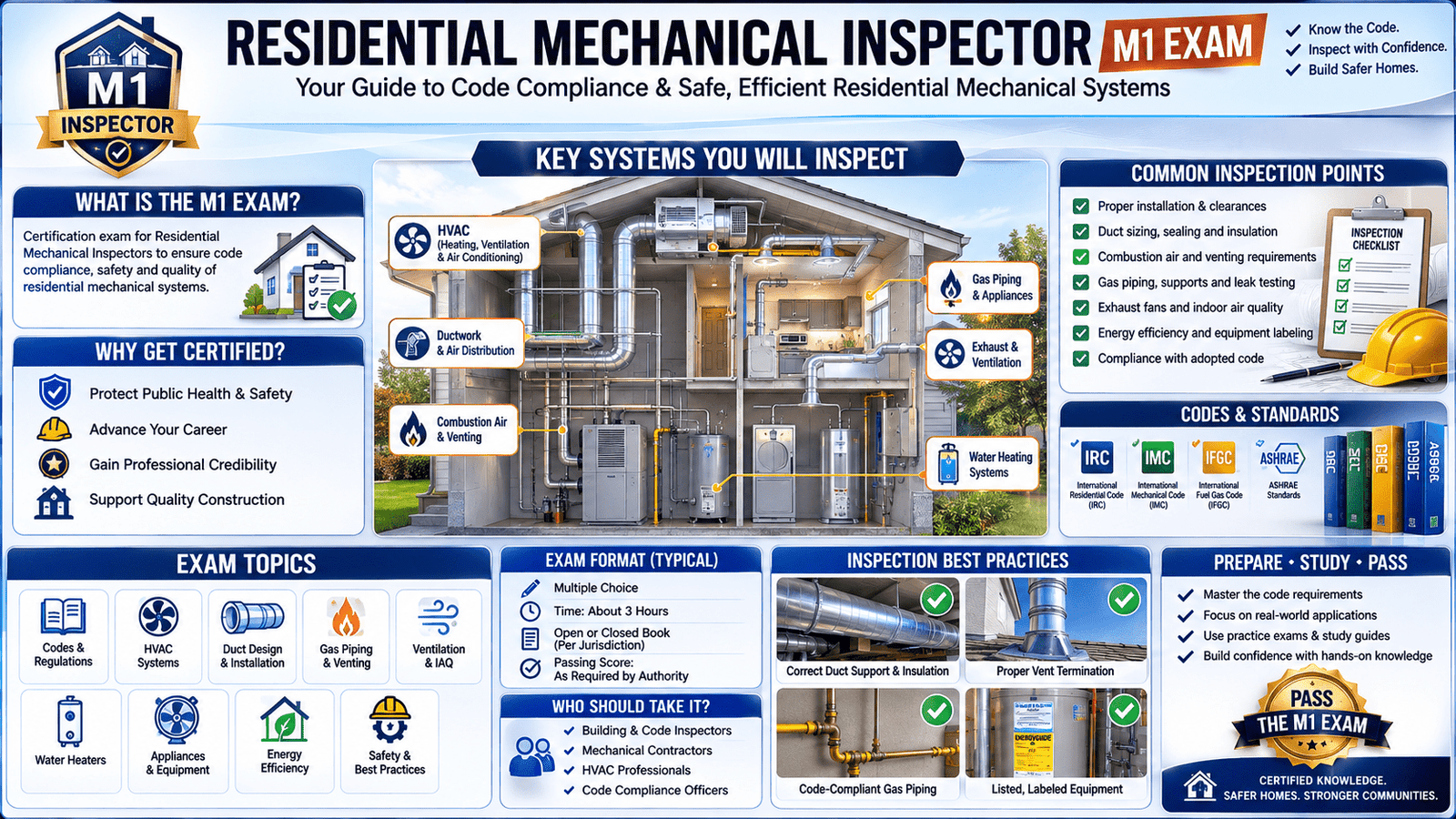
Introduction
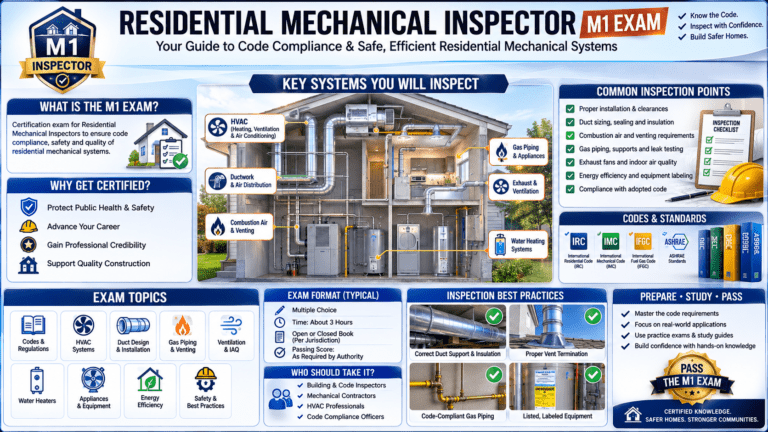
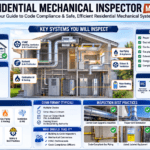
Every home depends on properly functioning mechanical systems. Heating, ventilation, and air conditioning systems keep families comfortable and safe. Ventilation systems protect indoor air quality. Fuel systems power appliances without endangering occupants. Behind every safe, code-compliant residential mechanical installation stands a qualified inspector who has verified that the work meets the highest standards of safety and quality.
The International Code Council’s Residential Mechanical Inspector – M1 certification represents the gold standard for professionals who inspect residential mechanical systems. It validates that you have the knowledge and competence to enforce the International Residential Code (IRC) and protect public safety. The M1 is also one of the four prerequisite exams required for the prestigious R5 Residential Combination Inspector (RCI) designation, which opens doors to broader career opportunities.
Yet for many professionals, the M1 exam can seem daunting. The International Residential Code is comprehensive. The range of topics—from heating equipment to gas piping to chimney venting—is broad. The exam is rigorous. Where does one even begin?
This guide provides a comprehensive overview of the Residential Mechanical Inspector – M1 exam, covering what it is, who it is for, the requirements, the exam content, preparation strategies, and how you can begin your journey toward earning this respected credential.
What Is the Residential Mechanical Inspector – M1 Certification?
The Residential Mechanical Inspector – M1 is a professional certification administered by the International Code Council (ICC). It is designed for individuals who inspect the installation, maintenance, and alteration of mechanical systems in residential buildings.
What Mechanical Inspectors Do
Mechanical inspectors focus on heating, ventilating, and air-conditioning (HVAC) concerns. Their responsibilities include:
- Inspecting mechanical appliances and equipment for code compliance
- Verifying proper installation of exhaust fans and range hoods
- Ensuring proper mechanical ventilation is provided where required
- Checking for air quality and energy conservation measures
- Verifying access, clearances, supply air, return air, and duct connections
- Ensuring installations comply with manufacturer’s instructions and equipment listings
Why This Certification Matters
Professional Recognition
The M1 certification validates your expertise in residential mechanical inspection. It demonstrates to employers, contractors, and the public that you have met rigorous standards of competence. As one course description notes, it is designed for “aspiring building inspectors, contractors, HVAC technicians, and design professionals seeking to earn their ICC M1 Certification”.
Career Advancement
ICC certifications are widely recognized across the United States. The M1 is one of the four prerequisite exams required for the R5 Residential Combination Inspector (RCI) designation. Combination designations open doors to broader career opportunities and higher-level positions.
Public Safety
Mechanical inspectors protect public safety by ensuring that residential mechanical systems are installed correctly and operate safely. The certification ensures that inspectors have the knowledge to identify code violations and enforce safety standards.
Job Market Advantage
As buildings become more complex and energy efficiency requirements increase, the demand for qualified mechanical inspectors continues to grow. Certification sets you apart from non-certified candidates.
Exam Overview
The Residential Mechanical Inspector – M1 exam is designed to test your knowledge of the International Residential Code (IRC) and your ability to apply it in inspection scenarios.
Exam Details
| Feature | Detail |
|---|---|
| Exam Code | M1 |
| Number of Questions | Typically 60-80 multiple-choice questions |
| Time Allowed | 120 minutes (2 hours) |
| Passing Score | 75% |
| Exam Format | Open-book (IRC permitted) |
| Reference Code | International Residential Code (IRC) |
| Exam Type | National |
Work Experience Requirement
The certification has a work experience requirement of more than two years but does not require a two-year Associates degree. Candidates with an Associates degree or higher may qualify with less experience.
What the Exam Tests
The exam evaluates your ability to navigate and interpret the International Residential Code, apply code requirements to real-world inspection scenarios, and identify code violations. According to the course description, you will learn “how to quickly locate and accurately apply requirements from the International Residential Code (IRC) regarding mechanical systems”.
Exam Content Areas
The M1 exam covers eight comprehensive content areas related to residential mechanical systems.
1. General Administration and Inspections
This section covers the administrative framework, including the inspector’s authority, the permit process, and the fundamental requirements for job-site safety and documentation.
Key Topics:
- Permit Requirements: Identifying when a mechanical permit is required and verifying that the scope of work matches the approved plans
- Inspections and Testing: Understanding the sequence of inspections (rough-in, underground, and final) and the required pressure tests for piping systems
- Existing Installations: Evaluating the legality and safety of existing mechanical systems during renovations or additions
- Job Site Safety: Recognising hazards related to excavations, ladders, and electrical components during a mechanical inspection
2. Heating and Cooling Equipment
This domain focuses on the installation, clearance, and operational requirements for primary HVAC units.
Key Topics:
- Equipment Listings and Labeling: Ensuring all appliances are listed by an approved agency and bear a permanent label with fuel ratings and clearances
- Access and Service Space: Verifying minimum dimensions for working space, attic access, and under-floor passageways
- Clearance to Combustibles: Checking that equipment is installed with the required distance from flammable materials as specified by the manufacturer or the IRC
- Condensation Disposal: Inspecting primary and secondary drain lines, pans, and overflow switches to prevent moisture damage
- Outdoor Installations: Ensuring units are supported on stable pads and protected from physical or environmental damage
3. Exhaust and Ventilation Systems
This section deals with air quality and the removal of moisture or contaminants from the living space.
Key Topics:
- Clothes Dryer Exhaust: Inspecting duct material (rigid metal requirements), maximum length calculations, and termination point requirements
- Kitchen and Bathroom Exhaust: Verifying that mechanical exhaust systems discharge directly to the outside and meet minimum CFM requirements
- Range Hoods: Checking for proper ducting and requirements for makeup air when high-BTU/high-CFM hoods are installed
- Mechanical Ventilation: Assessing whole-house ventilation systems designed to maintain indoor air quality in airtight modern homes
4. Duct Systems
This covers the distribution network that carries conditioned air throughout the dwelling.
Key Topics:
- Duct Construction: Inspecting the materials used for ducts (flex, rigid metal, or phenolic) and ensuring they are rated for their specific application
- Sealing and Insulation: Verifying that all joints and seams are sealed with approved tapes or mastics and that ducts in unconditioned spaces meet R-value insulation requirements
- Support and Installation: Checking that ducts are supported at the correct intervals to prevent sagging or restricted airflow
- Return Air Restrictions: Ensuring return air is not taken from prohibited locations, such as bathrooms, kitchens, or mechanical rooms
5. Combustion Air
A critical safety component, this ensures that fuel-burning appliances have enough oxygen to operate without creating carbon monoxide hazards.
Key Topics:
- Indoor Air Supplies: Calculating whether the volume of the room is sufficient to provide combustion air based on the total BTU input of all appliances
- Outdoor Air Supplies: Inspecting the sizing and placement of louvers and ducts that bring in fresh air from the exterior or ventilated attic/crawl spaces
- Opening Protection: Ensuring combustion air openings are protected with screens or grilles that do not excessively restrict airflow
6. Chimneys and Vents
This section focuses on the safe removal of combustion byproducts (flue gases) from the home.
Key Topics:
- Vent Sizing and Type: Differentiating between Type B, Type L, and plastic (PVC) vents, and ensuring they are sized correctly for the appliance’s draft category
- Termination and Flashing: Verifying that vents terminate at the required height above the roofline and away from windows, doors, or air intakes
- Common Venting: Inspecting systems where multiple appliances share a single vent to prevent backdrafting
- Masonry Chimneys: Checking for proper lining, cleanouts, and structural integrity of traditional chimneys used for mechanical venting
7. Fuel Gas Piping
Gas piping is one of the most high-risk areas of an inspection, requiring strict adherence to material and pressure standards.
Key Topics:
- Piping Materials: Identifying approved materials such as black steel, copper, or CSST and checking for proper coatings
- Support and Protection: Ensuring gas lines are supported at required intervals and protected by nail plates when passing through studs
- Sediment Traps and Shutoffs: Verifying that every appliance has an accessible shutoff valve and a sediment trap (drip leg) installed upstream of the control
- Pressure Testing: Witnessing the pressure test to ensure the system is gas-tight before it is concealed or put into service
8. Specific Appliances
Specialised requirements for less common or unique mechanical systems.
Key Topics:
- Solar Thermal Systems: Inspecting heat exchangers, solar collectors, and pressure relief valves
- Hydronic Piping: Checking the installation of hot water heating systems, including expansion tanks and pipe insulation
- Fireplaces and Solid Fuel Appliances: Verifying hearth extensions, chimney connectors, and air-source requirements
How to Prepare for the M1 Exam
Understand the Reference Code
The M1 exam is open-book, and the International Residential Code (IRC) is your primary reference. As the course description emphasises, you need to learn “Code Navigation & Interpretation: How to quickly locate and accurately apply requirements from the International Residential Code (IRC) regarding mechanical systems”. Familiarise yourself thoroughly with the mechanical provisions of the IRC. Tab key sections, highlight important passages, and practice finding information quickly.
Master the Eight Content Areas
The exam covers eight distinct content areas. Develop a study plan that allocates time to each area based on your familiarity and confidence. Practice applying code requirements to real-world inspection scenarios.
Use Practice Tests
Practice tests are one of the most effective preparation strategies. The Residential Mechanical Inspector – M1 Exam course includes comprehensive mock tests with 163 questions covering all exam topics. Working through practice questions helps you:
- Understand the exam format and question styles
- Identify areas where you need additional study
- Build confidence and reduce test anxiety
- Improve time management skills
Develop Inspection Methodology
Beyond knowing the code, you need to understand “field-tested techniques for conducting thorough rough-in and final mechanical inspections, identifying common violations”. The exam tests not just knowledge but application.
Manage Your Time
With 60-80 questions in 120 minutes, you have approximately 1.5-2 minutes per question. Practice pacing yourself to ensure you can complete all questions within the time limit. If you are stuck on a question, mark it and move on—you can return to it later if time permits.
Consider Formal Training
The ICC offers various study materials, practice exams, and training courses to help candidates prepare. The Residential Mechanical Inspector – M1 Exam course is specifically designed to help candidates pass the exam with comprehensive mock tests covering all key topics.
Career Opportunities with M1 Certification
The M1 certification opens doors to a wide range of career opportunities in building safety and code enforcement.
Residential Mechanical Inspector
As a certified Residential Mechanical Inspector, you will inspect residential mechanical installations to ensure compliance with the IRC. This role involves field inspections, report preparation, and communication with contractors and homeowners.
Combination Inspector
The M1 is one of four prerequisite exams for the R5 Residential Combination Inspector (RCI) designation. This combination designation demonstrates proficiency across multiple residential trade disciplines and opens doors to higher-level positions.
Code Enforcement Official
With experience and additional certifications, M1-certified professionals can advance to code enforcement supervisory roles, managing inspection teams and overseeing code administration.
Building Department Positions
M1 certification qualifies you for positions in municipal building departments, state agencies, and private code enforcement organisations.
Career Advancement
ICC certifications are widely recognized across the U.S. The M1 certification can qualify you for higher-level positions, increased responsibility, and greater earning potential.
What the M1 Exam Course Covers
The Residential Mechanical Inspector – M1 Exam course provides comprehensive preparation for the ICC M1 National Certification Exam.
Course Overview
| Feature | Detail |
|---|---|
| Total Questions | 163 practice questions across 3 mock tests |
| Instructor | Shilpi Jain |
| Last Updated | July 2026 |
| Language | English |
| Access | Full lifetime access, mobile viewing |
| Assignments | Included |
What You Will Learn
Code Navigation and Interpretation
You will learn how to quickly locate and accurately apply requirements from the International Residential Code (IRC) regarding mechanical systems.
System Design and Installation
You will learn the specific safety standards for HVAC equipment, exhaust systems, ductwork, and combustion air to ensure residential compliance.
Venting and Gas Piping
You will learn detailed technical requirements for fuel gas piping installations and the proper venting of various appliances.
Inspection Methodology
You will develop field-tested techniques for conducting thorough rough-in and final mechanical inspections, identifying common violations.
Test Structure
The course includes three practice tests covering all key exam topics:
Enrol in Residential Mechanical Inspector – M1 Exam Now
Who Should Take This Course
Aspiring Building Inspectors
Individuals who want to become certified residential mechanical inspectors will find this course an essential preparation tool.
Contractors
Contractors who want to understand code requirements and inspection procedures to ensure their work passes inspection.
HVAC Technicians
HVAC professionals who want to expand their knowledge of code compliance and inspection requirements.
Design Professionals
Design professionals who want to understand how their designs will be evaluated during inspection.
Code Enforcement Professionals
Current code enforcement officials who want to add the M1 certification to their credentials.
Frequently Asked Questions
What is the Residential Mechanical Inspector – M1 exam?
The M1 is an ICC certification exam for professionals who inspect residential mechanical systems. It tests knowledge of the International Residential Code (IRC) and the ability to apply it in inspection scenarios.
How many questions are on the M1 exam?
The exam typically consists of 60-80 multiple-choice questions. Practice tests in preparation courses typically include 53-57 questions per test.
How long is the exam?
The exam is 120 minutes (2 hours).
What is the passing score?
The passing score is typically 75%.
Is the exam open-book?
Yes. You may reference the International Residential Code (IRC) during the exam.
What code does the exam reference?
The exam is based on the International Residential Code (IRC).
What are the prerequisites for the M1 certification?
The certification has a work experience requirement of more than two years. Candidates with an Associates degree or higher may qualify with less experience.
How do I prepare for the M1 exam?
Preparation should include studying the IRC, using practice questions and mock tests, understanding the exam format, and managing your time effectively. The Residential Mechanical Inspector – M1 Exam course provides comprehensive mock tests.
What career opportunities does M1 certification prepare me for?
This certification prepares you for roles including Residential Mechanical Inspector, Combination Inspector, Code Enforcement Official, and Building Department Professional.
Recommended Related Courses
To build a comprehensive mechanical inspection and certification skillset, consider these additional courses:
Residential Mechanical Inspector – 1M Exam – Comprehensive preparation for the ICC M1 certification exam.
Commercial Mechanical Inspector – 2M Exam – Advance your career with commercial mechanical inspection certification.
Mechanical Plans Examiner – M3 Exam – Develop plans examination skills for career advancement.
Mechanical Code Specialist – M8 – Progress to the Code Specialist level with comprehensive mechanical code knowledge.
National Standard Residential Mechanical Class C F32-N Exam – Build foundational mechanical code knowledge for contractor licensing.
2024 Practice Exam – (M1) Residential Mechanical Inspector – Practice exams specifically designed for the 2024 M1 certification.
California Residential Mechanical Inspector – J4 Exam – State-specific residential mechanical inspector certification.
Thermodynamics for Mechanical Engineering – Build foundational knowledge in thermodynamics relevant to mechanical systems.
Final Thoughts
The ICC Residential Mechanical Inspector – M1 certification is a mark of professional excellence in the field of building safety. It demonstrates that you have the knowledge and competence to inspect residential mechanical systems and protect public safety. It is the foundation for a rewarding career in code enforcement and building inspection.
For mechanical inspectors, HVAC professionals, and building safety professionals, the M1 certification represents a significant career achievement. It opens doors to advancement, combination designations, and leadership roles in code administration.
The Residential Mechanical Inspector – M1 Exam course provides the comprehensive mock tests and preparation you need to earn this respected credential.
Start your journey toward becoming a certified Residential Mechanical Inspector today.
Enrol in Residential Mechanical Inspector – M1 Exam
About the Author