
 Edu_Admin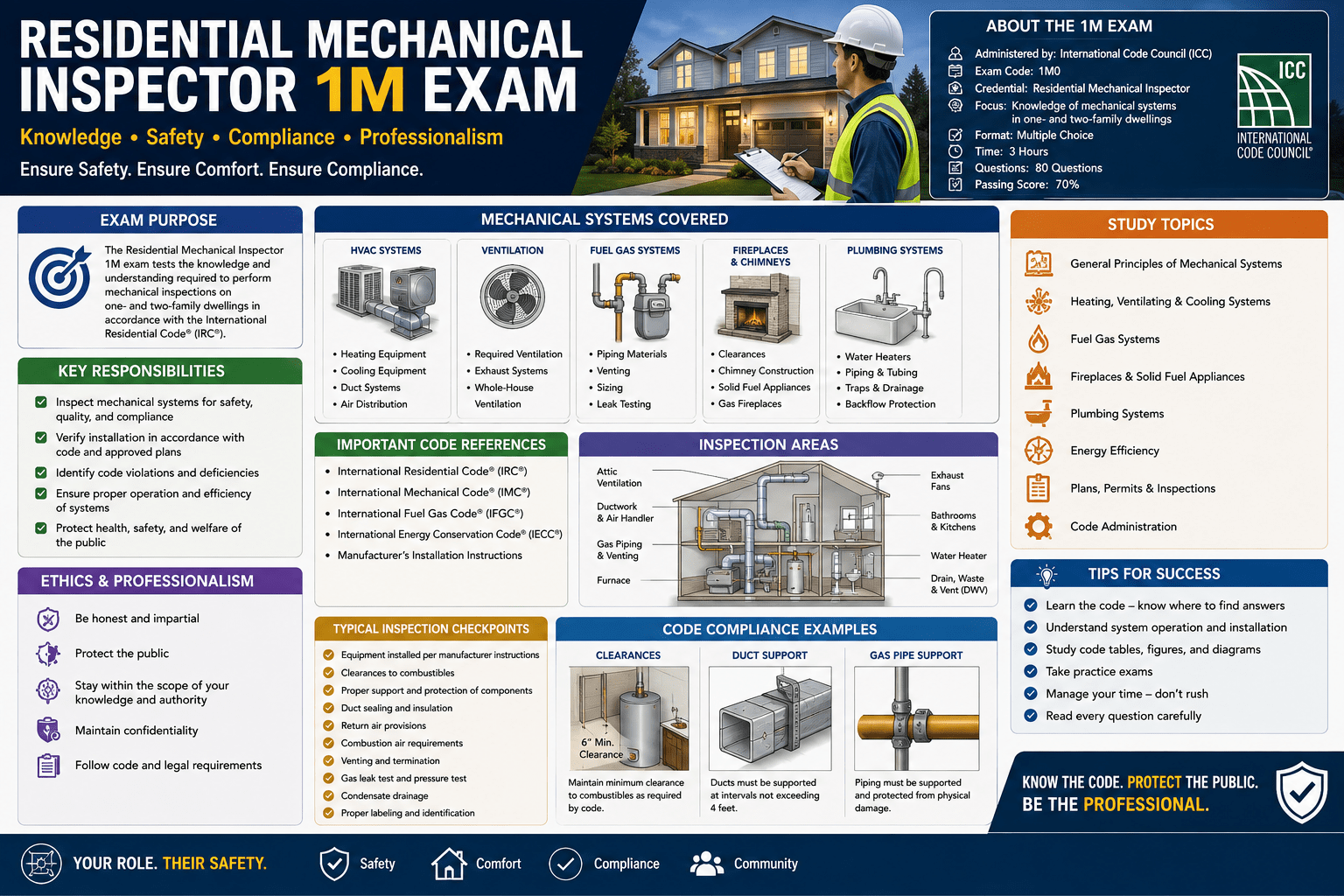
Introduction
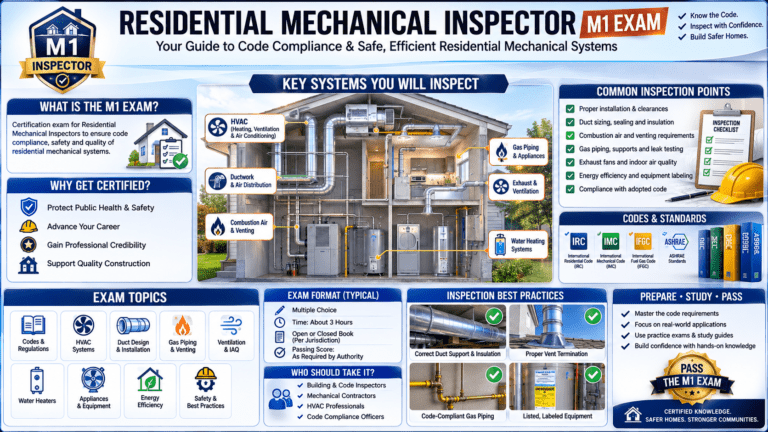
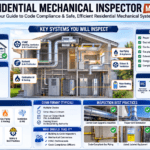
Every home depends on properly functioning mechanical systems. Heating, ventilation, and air conditioning systems keep families comfortable and safe. Ventilation systems protect indoor air quality. Fuel systems power appliances without endangering occupants. Behind every safe, code-compliant residential mechanical installation stands a qualified inspector who has verified that the work meets the highest standards of safety and quality.
The International Code Council’s Residential Mechanical Inspector – M1 certification represents the gold standard for professionals who inspect residential mechanical systems. It validates that you have the knowledge and competence to enforce the International Residential Code and protect public safety. It is also a prerequisite for the prestigious R5 Residential Combination Inspector (RCI) designation, which opens doors to broader career opportunities.
This guide provides a comprehensive overview of the Residential Mechanical Inspector – 1M exam, covering what it is, who it is for, the requirements, the exam content, preparation strategies, and how you can begin your journey toward earning this respected credential.
What Is the Residential Mechanical Inspector – 1M Certification?
The Residential Mechanical Inspector – M1 is a professional certification administered by the International Code Council (ICC). It is designed for individuals who inspect the installation, maintenance, and alteration of mechanical systems in residential buildings.
What Mechanical Inspectors Do
Mechanical inspectors focus on heating, ventilating, and air-conditioning (HVAC) concerns. Their responsibilities include:
- Inspecting mechanical appliances and equipment for code compliance
- Verifying proper installation of exhaust fans and range hoods
- Ensuring proper mechanical ventilation is provided where required
- Checking for air quality and energy conservation measures
- Verifying access, clearances, supply air, return air, and duct connections
- Ensuring installations comply with manufacturer’s instructions and equipment listings
Why This Certification Matters
Professional Recognition
The M1 certification validates your expertise in residential mechanical inspection. It demonstrates to employers, contractors, and the public that you have met rigorous standards of competence.
Career Advancement
ICC certifications are widely recognized across the United States. The M1 is one of the four prerequisite exams required for the R5 Residential Combination Inspector (RCI) designation. Combination designations open doors to broader career opportunities and higher-level positions.
Public Safety
Mechanical inspectors protect public safety by ensuring that residential mechanical systems are installed correctly and operate safely. The certification ensures that inspectors have the knowledge to identify code violations and enforce safety standards.
Job Market Advantage
As buildings become more complex and energy efficiency requirements increase, the demand for qualified mechanical inspectors continues to grow. Certification sets you apart from non-certified candidates.
Exam Overview
The Residential Mechanical Inspector – M1 exam is designed to test your knowledge of the International Residential Code (IRC) and your ability to apply it in inspection scenarios.
Exam Details
| Feature | Detail |
|---|---|
| Exam Code | M1 |
| Number of Questions | 60 multiple-choice questions |
| Time Allowed | 120 minutes (2 hours) |
| Passing Score | 75% (approximately 45 correct answers out of 60) |
| Exam Format | Open-book |
| Reference Code | International Residential Code (IRC) |
| Exam Type | National |
| Cost | Member: $230; Non-member: $290 |
Work Experience Requirement
The certification has a work experience requirement of more than two years but does not require a two-year Associates of Arts or Associates of Sciences degree. Candidates with an Associates degree or higher may qualify with less experience.
Exam Content Areas
The M1 exam covers a comprehensive range of topics related to residential mechanical systems. According to available resources, the exam content focuses on the following key areas:
General Requirements
This section covers the fundamental provisions of the IRC that apply to all mechanical installations. Topics include:
- Permit requirements and when they are needed
- General installation standards
- Clearance and access requirements
- Manufacturer’s instructions and equipment listings
Heating, Cooling, and Water Heaters
This section tests your knowledge of heating and cooling systems and water heating equipment. Topics include:
- Installation of furnaces, boilers, and heat pumps
- Central air conditioning systems
- Water heater installation and safety requirements
- Equipment sizing and selection
- Proper venting and combustion air
Exhaust and Ventilation Systems
Proper ventilation is essential for indoor air quality and safety. This section covers:
- Exhaust fan installation requirements
- Mechanical ventilation requirements
- Range hoods and kitchen exhaust
- Bathroom exhaust systems
- Makeup air requirements
Duct Systems
Ductwork is critical for the proper distribution of conditioned air. This section covers:
- Duct construction and installation standards
- Duct sizing and design
- Insulation requirements
- Duct sealing and leakage testing
- Connections to plenums
Combustion Air
Proper combustion air is essential for the safe operation of fuel-burning appliances. This section covers:
- Combustion air requirements for gas-fired appliances
- Air openings and their sizing
- Confined spaces and their requirements
- Outdoor and indoor combustion air sources
Chimneys and Vents
Venting systems must safely exhaust combustion products. This section covers:
- Chimney construction and clearance requirements
- Vent connector sizing and installation
- Type B and Type L venting systems
- Termination requirements
Fuel Supply Systems
Fuel systems must be installed safely and in compliance with code. This section covers:
- Gas piping installation
- Fuel storage and supply requirements
- Gas appliance connectors
- Pressure testing and leak detection
How to Prepare for the M1 Exam
Understand the Reference Code
The M1 exam is open-book, and the International Residential Code (IRC) is your primary reference. Familiarise yourself thoroughly with the mechanical provisions of the IRC. Know how to navigate the code book efficiently during the exam. Tab key sections, highlight important passages, and practice finding information quickly.
Focus on Key Content Areas
Identify the subject areas that carry the most weight in the examination. Allocate more study time to these areas while maintaining coverage of all topics. The exam covers general requirements, heating/cooling/water heaters, exhaust and ventilation, duct systems, combustion air, chimneys and vents, and fuel supply systems.
Use Practice Questions
Working through practice questions is one of the most effective preparation strategies. Practice exams help you:
- Understand the exam format and question styles
- Identify areas where you need additional study
- Build confidence and reduce test anxiety
- Improve time management skills
Many study guides offer practice questions with code references, allowing you to learn the code while you practice. Some workbooks contain over 600 practice questions.
Practice with the Code
Because the exam is open-book, your ability to navigate the code efficiently is critical. Practice finding answers to sample questions using the IRC. Develop a system for quickly locating information, such as color-coded tabs or a detailed index.
Consider Formal Training
The ICC offers various study materials, practice exams, and training courses to help candidates prepare. The 2024 Residential Mechanical Inspector – M1 Study Guide provides information on ICC certification exams and how to prepare for them, along with practice items in the likeness of what is on the exam.
Manage Your Time
With 60 questions in 120 minutes, you have approximately 2 minutes per question. Practice pacing yourself to ensure you can complete all questions within the time limit. If you are stuck on a question, mark it and move on—you can return to it later if time permits.
Career Opportunities with M1 Certification
The M1 certification opens doors to a wide range of career opportunities in building safety and code enforcement.
Residential Mechanical Inspector
As a certified Residential Mechanical Inspector, you will inspect residential mechanical installations to ensure compliance with the IRC. This role involves field inspections, report preparation, and communication with contractors and homeowners.
Combination Inspector
The M1 is one of four prerequisite exams for the R5 Residential Combination Inspector (RCI) designation. This combination designation demonstrates proficiency across multiple residential trade disciplines and opens doors to higher-level positions.
Code Enforcement Official
With experience and additional certifications, M1-certified professionals can advance to code enforcement supervisory roles, managing inspection teams and overseeing code administration.
Building Department Positions
M1 certification qualifies you for positions in municipal building departments, state agencies, and private code enforcement organisations.
Career Advancement
ICC certifications are widely recognized across the U.S. The M1 certification can qualify you for higher-level positions, increased responsibility, and greater earning potential.
Frequently Asked Questions
What is the Residential Mechanical Inspector – M1 exam?
The M1 is an ICC certification exam for professionals who inspect residential mechanical systems. It tests knowledge of the International Residential Code (IRC) and the ability to apply it in inspection scenarios.
How many questions are on the M1 exam?
The exam consists of 60 multiple-choice questions.
How long is the exam?
The exam is 120 minutes (2 hours).
What is the passing score?
The passing score is 75%, which means you need to answer approximately 45 questions correctly out of 60.
Is the exam open-book?
Yes. You may reference the International Residential Code (IRC) during the exam.
What code does the exam reference?
The exam is based on the International Residential Code (IRC).
What are the prerequisites for the M1 certification?
The certification has a work experience requirement of more than two years. Candidates with an Associates degree or higher may qualify with less experience. An oral or written exam is required.
How do I prepare for the M1 exam?
Preparation should include studying the IRC, using practice questions and study guides, understanding the exam format, and managing your time effectively. The Residential Mechanical Inspector – 1M Exam course provides comprehensive preparation.
Mastering the M1 Exam: Your Next Step
The ICC Residential Mechanical Inspector – M1 certification is a significant career achievement. It demonstrates your expertise, opens doors to advancement, and positions you as a leader in building safety. But passing the exam requires focused preparation and a solid understanding of the International Residential Code.
The Residential Mechanical Inspector – 1M Exam course provides the comprehensive preparation you need to succeed on the M1 exam.
The course covers:
- Complete understanding of the M1 certification requirements
- In-depth coverage of the International Residential Code (IRC)
- Practice questions and simulated exams
- Strategies for navigating the open-book exam
- Real-world inspection scenarios and applications
Enrol in Residential Mechanical Inspector – 1M Exam Now
Recommended Related Courses
To build a comprehensive mechanical inspection and certification skillset, consider these additional courses:
Commercial Mechanical Inspector – 2M Exam – Advance your career with commercial mechanical inspection certification.
Mechanical Plans Examiner – M3 Exam – Develop plans examination skills for career advancement.
Mechanical Code Specialist – M8 – Progress to the Code Specialist level with comprehensive mechanical code knowledge.
National Standard Residential Mechanical Class C F32-N Exam – Build foundational mechanical code knowledge for contractor licensing.
National Standard Journeyman Mechanical – F31-N Exam – Advance your mechanical code knowledge for journeyman-level certification.
2024 Practice Exam – (M1) Residential Mechanical Inspector – Practice exams specifically designed for the 2024 M1 certification.
2021 Practice Exam – (M1) Residential Mechanical Inspector – Additional practice for the M1 exam.
2024 Residential Mechanical Inspector Practice Exam – Comprehensive practice tests for the 2024 M1 exam.
California Residential Mechanical Inspector – J4 Exam – State-specific residential mechanical inspector certification.
Thermodynamics for Mechanical Engineering – Build foundational knowledge in thermodynamics relevant to mechanical systems.
Final Thoughts
The ICC Residential Mechanical Inspector – M1 certification is a mark of professional excellence in the field of building safety. It demonstrates that you have the knowledge and competence to inspect residential mechanical systems and protect public safety. It is the foundation for a rewarding career in code enforcement and building inspection.
For mechanical inspectors, HVAC professionals, and building safety professionals, the M1 certification represents a significant career achievement. It opens doors to advancement, combination designations, and leadership roles in code administration.
The Residential Mechanical Inspector – 1M Exam course provides the comprehensive preparation you need to earn this respected credential.
Start your journey toward becoming a certified Residential Mechanical Inspector today.
Enrol in Residential Mechanical Inspector – 1M Exam
About the Author