
 Edu_Admin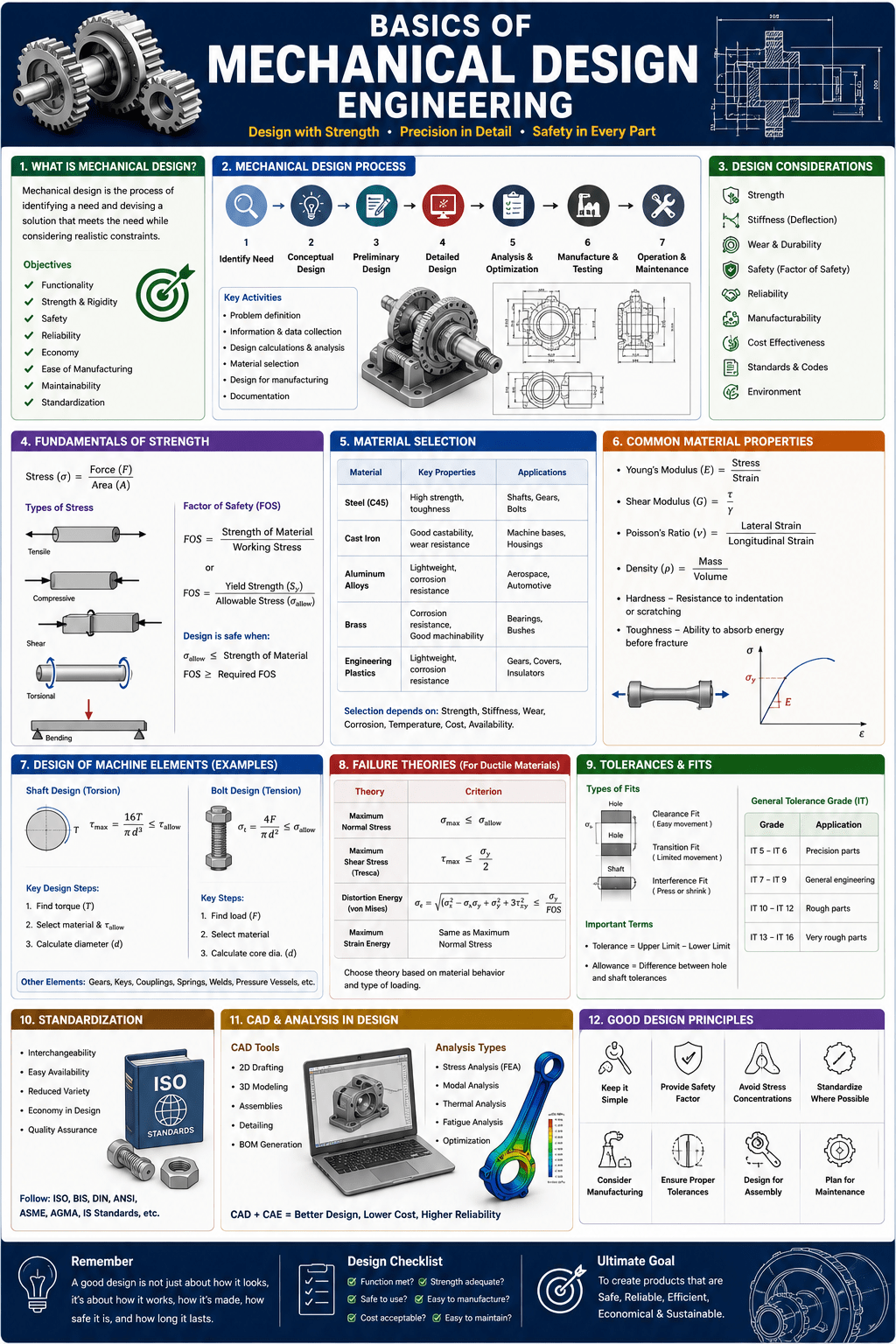
Introduction
Mechanical design engineering is the discipline that turns ideas into real products. It is the bridge between concept and reality, between a sketch on a napkin and a component that can be manufactured, assembled, and used. Every machine, every vehicle, every product you interact with was designed by someone who understood the principles of mechanical design engineering.
Yet for many engineering students and professionals, the path to becoming a design engineer can seem unclear. What exactly does a design engineer do? What skills are required? Where does one even begin?
The truth is that mechanical design engineering is a vast and rewarding field. It encompasses everything from understanding core engineering subjects to mastering drafting skills, from selecting materials to planning manufacturing processes. It is a discipline that requires both theoretical knowledge and practical application.
This is where structured, introductory training becomes invaluable. The Basics of Mechanical Design Engineering (2022) course is designed specifically for those who want to understand the fundamentals of mechanical designing and build a foundation for a career in this field.
This guide provides a comprehensive overview of what mechanical design engineering entails, what the course covers, why these skills matter for your career, and how you can begin your journey today.
What Is Mechanical Design Engineering?
Mechanical design engineering is the process of creating and developing mechanical systems and components. It involves applying engineering principles, materials science, and manufacturing knowledge to design products that are functional, reliable, and manufacturable.
What Does a Mechanical Design Engineer Do?
A mechanical design engineer takes a concept or requirement and transforms it into a detailed design that can be manufactured. This involves:
- Understanding Requirements: Determining what the product needs to do and what constraints it must satisfy
- Conceptual Design: Developing initial ideas and evaluating different approaches
- Detailed Design: Creating detailed drawings, specifications, and models
- Material Selection: Choosing appropriate materials for the application
- Manufacturing Planning: Ensuring the design can be produced efficiently and economically
- Testing and Validation: Verifying that the design meets requirements
Why Mechanical Design Engineering Matters
Mechanical design engineering is the foundation of product development across virtually every industry. Without design engineers, there would be:
- No vehicles, from bicycles to spacecraft
- No manufacturing equipment, from lathes to robotic assembly lines
- No consumer products, from smartphones to kitchen appliances
- No medical devices, from surgical instruments to diagnostic equipment
- No energy systems, from wind turbines to nuclear reactors
Design engineers are the professionals who make things work. They combine creativity with technical rigour to solve real-world problems.
Why a Career in Mechanical Design Engineering?
High Demand
Mechanical design engineers are needed across virtually every industry sector. Companies in automotive, aerospace, consumer products, medical devices, energy, manufacturing, and countless other fields require design engineers to develop their products.
Creative and Technical Challenge
Mechanical design engineering offers a unique blend of creativity and technical problem-solving. You get to create new things while applying rigorous engineering principles.
Career Progression
Design engineering offers clear career progression from junior designer to senior design engineer, lead engineer, engineering manager, and beyond. The skills you develop are transferable across industries.
Tangible Results
Unlike some engineering disciplines, design engineering produces tangible results. The components and products you design become real objects that people use every day.
What You Will Learn in This Course
The Basics of Mechanical Design Engineering (2022) course is an introductory course that gives you insight into mechanical designing and provides all industry-required skills.
Course Overview
| Feature | Detail |
|---|---|
| Total Duration | 4 hours 58 minutes |
| Number of Lectures | 121 lectures |
| Number of Chapters | 6 chapters |
| Language | English |
| Last Updated | June 2022 |
| Student Enrollment | 60+ students |
Module 1: Designing Procedure and Design Approaches
In the first module, the designing procedure is revealed along with different design approaches. You will learn about:
- The systematic design process
- Design for Excellence (DFX)
- Design for Manufacturing (DFM)
- Design for Assembly (DFA)
These terms are the bases of product designing.
Module 2: Core Drafting Skills
Mastering drafting skills is the first step toward becoming a design engineer. In this module, you will learn the core skills of drafting:
- Engineering drawing symbols
- Fits and tolerances
- Geometric Dimensioning and Tolerancing (GD&T)
This module is discussed in detail because drafting is fundamental to the design engineer’s role.
Module 3: Manufacturing Processes and Heat Treatment
Process planning is a very important part of designing. The third module covers:
- Manufacturing processes
- Heat treatment processes
This module provides a complete understanding of manufacturing processes using videos and illustrations.
Module 4: Engineering Materials
In the fourth module, an overview of engineering materials is discussed. Topics include:
- Classification of engineering materials
- Properties of engineering materials
- Selection procedure of material for a product
Module 5: Core Engineering Concepts in Design
In the fifth module, you will discuss core engineering concepts and how they should be used in the work of designing. This connects academic knowledge to practical design application.
Bonus Module: Industry Overview
Before the modules begin, there is a video regarding designing work. In this video, you will understand the nature of the work in different mechanical industries.
Enrol in Basics of Mechanical Design Engineering (2022) Now
What Makes This Course Different
Introductory Yet Comprehensive
This course is designed as an introductory course to all industrial specialised courses. It provides a broad overview while still covering essential topics in depth.
Industry-Focused Skills
You will learn all industry-required skills. The course bridges the gap between academic knowledge and what employers actually need.
Bite-Sized, Knowledge-Packed Videos
Videos are smaller in size and contain huge knowledge. You will get more knowledge and industrial exposure in an efficient format.
Structured Learning Path
The course is structured in such a way that you can learn more specifically about the industry. All modules consist of the required knowledge.
Builds Curiosity
As the course description notes, it “will ignite a spark of curiosity in you”. This is not just a training course—it is an introduction to a career.
Who Should Take This Course
Engineering Students
Engineering students looking for a career in design engineering will find this course an essential foundation. It provides the industry exposure that academic programs often lack.
Working Engineers
Working engineers who want to make a career in design engineering can use this course to build or refresh their skills. It is an ideal starting point for a career transition.
Anyone Interested in Product Design
Anyone interested in learning about how to design products will benefit from this comprehensive introduction.
Fresh Graduates
Fresh graduates entering the job market will gain practical knowledge that sets them apart from other candidates.
Requirements
The course has modest requirements:
No advanced experience is required. The course is designed to be accessible while providing substantial value.
Frequently Asked Questions
What is mechanical design engineering?
Mechanical design engineering is the process of creating and developing mechanical systems and components by applying engineering principles, materials science, and manufacturing knowledge to design functional, reliable, and manufacturable products.
What does a mechanical design engineer do?
A mechanical design engineer transforms concepts into detailed designs, selects materials, plans manufacturing processes, and creates technical documentation. They work across industries including automotive, aerospace, consumer products, and medical devices.
Do I need prior experience to take this course?
Basic knowledge of mechanical engineering core subjects is recommended but not strictly required. The course is designed as an introductory course.
How long is the course?
The course includes 4 hours 58 minutes of video content across 121 lectures and 6 chapters.
What topics are covered in this course?
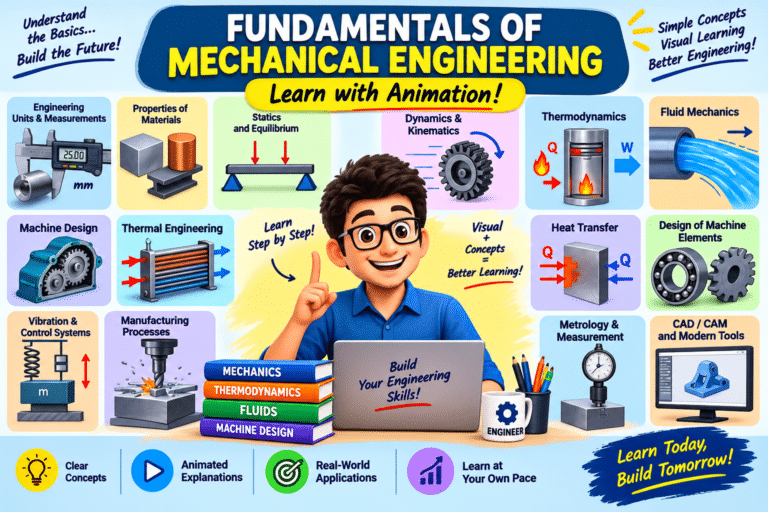
The course covers the design procedure, design approaches (DFX, DFM, DFA), drafting skills (symbols, fits, tolerances, GD&T), manufacturing processes, heat treatment, engineering materials, and core engineering concepts in design.
Will this course help me get a job in design engineering?
Yes. The course provides industry-required skills and knowledge that employers seek in entry-level design engineers.
Is this course suitable for students?
Yes. The course is specifically designed for engineering students looking for a career in design engineering.
Building Your Career in Mechanical Design
The Skills Employers Look For
Based on this course structure and industry requirements, employers typically seek design engineers who understand:
- Core Engineering Principles: Strength of materials, mechanics, thermodynamics, and fluid mechanics
- Drafting and GD&T: The ability to create and interpret engineering drawings
- Manufacturing Processes: Understanding how parts are actually made
- Materials Selection: Choosing appropriate materials for applications
- Design Methodologies: DFM, DFA, and other systematic approaches
Career Pathways
Entry-Level Design Engineer
- Create and modify detailed drawings
- Support senior engineers in design activities
- Learn industry practices and standards
Design Engineer
- Lead design projects
- Perform calculations and analysis
- Select materials and manufacturing processes
- Create complete design documentation
Senior Design Engineer
- Lead complex design projects
- Mentor junior engineers
- Drive design strategy and innovation
Lead Engineer / Engineering Manager
- Manage engineering teams
- Set design standards and processes
- Align engineering with business objectives
Mastering Mechanical Design Basics: Your Next Step
Mechanical design engineering is a rewarding career that combines creativity with technical rigour. But like any engineering discipline, it requires structured learning and practical application.
The Basics of Mechanical Design Engineering (2022) course provides the foundation you need. With 5 hours of focused instruction across 121 lectures, you will develop the skills to:
- Understand the systematic design procedure
- Apply design approaches including DFM and DFA
- Master core drafting skills including GD&T
- Understand manufacturing processes and heat treatment
- Select appropriate engineering materials
- Apply core engineering concepts to design work
The course starts from the fundamentals and builds your knowledge systematically.
Enrol in Basics of Mechanical Design Engineering (2022) Now
Recommended Related Courses
To build a comprehensive mechanical design engineering skillset, consider these additional courses:
Mechanical Engineering Design – The Ultimate Course – Comprehensive coverage of mechanical engineering design theory.
Intro to Mechanical Design Engineering Skillset – Understand what design engineers do and how to become one.
Mechanical Design Fundamentals – Comprehensive introduction to the fundamental concepts of mechanical design.
Mechanical Engineering-Machine Designing-1 – Learn to design and model machine components including gears, shafts, and springs.
Basics of Material Selection for Mechanical Design Engineers – Deepen your understanding of materials and their selection.
Mechanical Design-Part(1) – Continue your mechanical design education.
Mechanical Design and Product Development Process – Understand the complete product development lifecycle.
Career Kickstart: Mechanical Engineers Job Ready – Complete career preparation for mechanical engineers entering the job market.
Final Thoughts
Mechanical design engineering is one of the most rewarding and practical disciplines within mechanical engineering. It is the profession that turns ideas into reality, that creates the products and machines that power modern life.
The journey to becoming a design engineer starts with understanding the fundamentals. What is the design process? What skills are required? How do you apply engineering knowledge to real design problems? These are the questions that this course answers.
The Basics of Mechanical Design Engineering (2022) course provides the structured, industry-focused introduction you need to start your journey. With 5 hours of content across 121 lectures, it is the ideal starting point for anyone interested in mechanical design.
Start your design engineering journey today.
Enrol in Basics of Mechanical Design Engineering (2022)
About the Author