
 Edu_Admin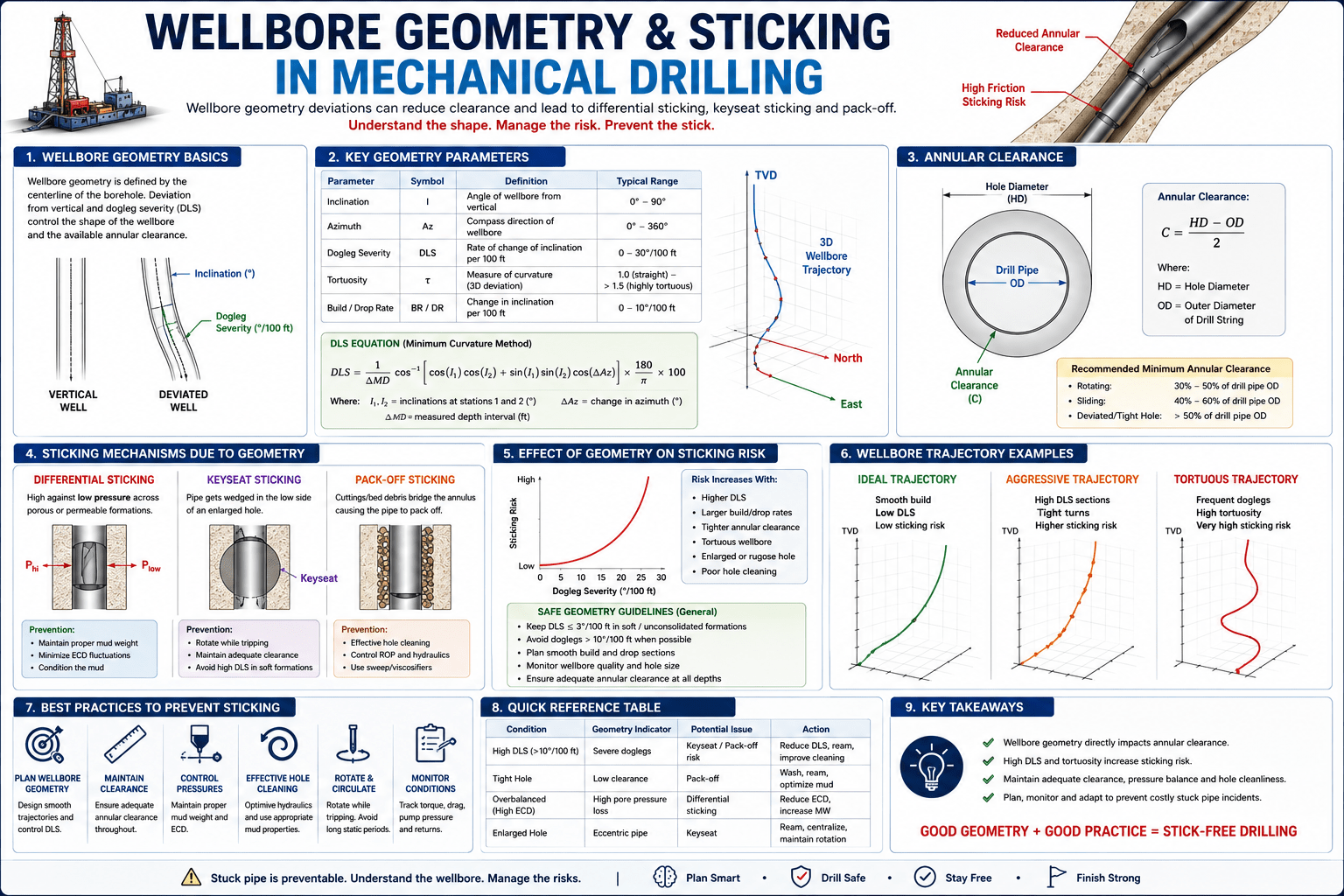
Introduction
Stuck pipe is one of the most feared and costly problems in drilling operations. It can bring a rig to a standstill, consume millions of dollars in non-productive time, and in the worst cases, lead to the loss of an entire well section or the abandonment of the well itself.
Consider the scale of the challenge. Stuck pipe complications can account for nearly half of total well cost, making it one of the most expensive problems that can occur during drilling operations. The petroleum industry loses billions of dollars annually to this single issue.
Yet despite its prevalence, many drilling professionals lack a comprehensive understanding of why pipes get stuck, particularly when it comes to mechanical sticking caused by wellbore geometry anomalies. The distinction between mechanical sticking and differential sticking is critical, and the causes of mechanical sticking—from keyseating to packoff to wellbore instability—require specific knowledge to prevent and mitigate.
wellbore geometry sticking mechanical drilling provides a comprehensive overview of mechanical and wellbore geometry sticking in drilling operations. It covers what mechanical sticking is, how it differs from differential sticking, the specific causes related to wellbore geometry, prevention strategies, and the training resources you need to master this critical aspect of drilling engineering.
What Is Mechanical Sticking?
Mechanical sticking is defined as the limiting or prevention of motion of the drillstring by anything other than differential pressure sticking. In simpler terms, when the drill pipe becomes stuck due to a physical obstruction or restriction rather than pressure forces, it is classified as mechanical sticking.
Mechanical Sticking vs. Differential Sticking
Understanding the distinction between these two categories is essential for correct diagnosis and response.
Differential Pipe Sticking (DPS) occurs when the hydrostatic pressure of the drilling fluid exceeds the formation pore pressure. The pressure difference forces the drill string against the permeable formation wall, embedding it in the mud cake. Key indicators include:
- The pipe cannot be rotated or moved vertically
- Mud circulation remains possible
- The sticking force increases with time
Mechanical Sticking occurs when the drill string is obstructed by a physical cause rather than differential pressure. Common causes include:
- Wellbore geometry anomalies and irregularities
- Keyseating
- Packoff from poor hole cleaning
- Shale swelling and wellbore collapse
- Junk or debris in the hole
- Cement-related issues
The Significance of Wellbore Geometry Sticking
Wellbore geometry sticking is a specific subset of mechanical sticking caused by irregularities in the wellbore shape or path. When the wellbore deviates from its intended smooth, uniform geometry, it creates obstacles that can trap the drill string.
As one industry expert explains, “Wellbore Geometry Sticking: When the Hole Fights Back” describes situations where the wellbore itself becomes the source of the problem. This can occur when the wellbore expands due to swelling rocks, reducing the available space for the drilling pipe, or when the wellbore contains ledges, keyseats, or doglegs that catch the drill string.
Types of Mechanical Sticking
Keyseating
A keyseat is a groove or channel cut into the side of the wellbore, parallel to the axis of the hole. It is typically formed when the drill string rotates against a hard formation ledge or in a dogleg.
Why It Causes Sticking: When the drill string is pulled upward, the larger diameter tool joints can become wedged in the narrow groove, preventing retrieval.
Prevention Strategies:
- Keeping turns in the wellbore gradual and smooth
- Using reamers or hole openers to enlarge the wellbore radius
- Close monitoring of torque and drag indicators
Packoff
Packoff occurs when drilled cuttings accumulate in the annulus and pack around the drill string, preventing movement.
Why It Causes Sticking: Inadequate hole cleaning allows cuttings to settle and compact around the drill pipe, creating a physical obstruction.
Prevention Strategies:
- Maintaining adequate annular velocity
- Close monitoring of cuttings returns
- Proper mud properties for effective cuttings transport
- Special attention in high-angle wells where cuttings tend to settle
Wellbore Instability and Collapse
Wellbore instability occurs when the formation fails mechanically, causing the wellbore to collapse or swell.
Why It Causes Sticking: Swelling shales or collapsing formations reduce the wellbore diameter, pinching the drill string. This is particularly common in shale layers where compressive failure occurs due to low wellbore pressure.
Prevention Strategies:
- Proper mud weight to support the formation
- Inhibitive drilling fluids to prevent shale swelling
- Geomechanical modeling to predict instability zones
Doglegs and Ledges
Doglegs are sharp changes in wellbore inclination or azimuth. Ledges are hard formation steps left in the wellbore.
Why They Cause Sticking: These irregularities create mechanical obstructions that catch the drill string, particularly during tripping operations.
Prevention Strategies:
- Gradual, smooth directional changes
- Proper BHA design for the planned trajectory
- Use of stabilisers and reamers
Stiff Assembly Sticking
This type of sticking occurs when the Bottom Hole Assembly (BHA) is too rigid for the wellbore’s inclination or curvature.
Why It Causes Sticking: A stiff BHA cannot bend sufficiently to follow the wellbore path, causing it to become wedged.
Prevention Strategies:
- Proper BHA design matching the planned wellbore trajectory
- Use of flexible components where appropriate
- Pre-drill modeling of BHA behaviour
The Consequences of Stuck Pipe
The consequences of a stuck pipe incident extend far beyond the immediate downtime.
Financial Impact
Stuck pipe complications can account for nearly half of total well cost. This includes:
- Rig downtime and associated day rates
- Fishing operations to recover lost equipment
- Sidetracking or re-drilling costs
- Lost equipment value
- Potential well abandonment costs
Non-Productive Time (NPT)
Stuck pipe is a major contributor to non-productive time in drilling operations. Every hour spent attempting to free a stuck pipe is an hour not spent drilling ahead.
Operational Risks
In severe cases, stuck pipe can lead to:
- Loss of downhole equipment
- Sidetracking and loss of the original wellbore section
- Well abandonment
- Safety risks to personnel during recovery operations
Prevention Strategies for Mechanical Sticking
Prevention is always more cost-effective than remediation. The following strategies are essential for minimising mechanical sticking risk.
Proper Hole Cleaning
Inadequate hole cleaning is one of the primary causes of mechanical sticking. Ensuring effective cuttings transport is essential.
Best Practices:
- Maintain adequate annular velocity
- Monitor cuttings returns closely
- Use appropriate mud rheology for cuttings transport
- Perform wiper trips to clean the hole
- Consider hole cleaning runs in deviated wells
Wellbore Geometry Management
Managing wellbore geometry is critical for preventing mechanical sticking.
Best Practices:
- Plan smooth, gradual directional changes
- Avoid sharp doglegs
- Use reamers to maintain hole gauge
- Monitor wellbore stability indicators
- Conduct pre-drill geomechanical modeling
Drilling Fluid Optimisation
The drilling fluid plays a critical role in preventing mechanical sticking.
Best Practices:
- Use inhibitive fluids for reactive formations
- Maintain proper mud weight for wellbore stability
- Add lubricants to reduce friction
- Formulate a thin, impermeable filter cake
BHA Design Optimisation
Proper BHA design can prevent stiff assembly sticking.
Best Practices:
- Match BHA stiffness to planned trajectory
- Use stabilisers appropriately
- Consider flexible components for curved sections
- Model BHA behaviour pre-drill
Real-Time Monitoring
Early warning signs can prevent stuck pipe incidents.
Warning Signs to Monitor:
- Increases in torque and drag
- Excessive cuttings loading
- Tight spots while tripping
- Loss of circulation
Geomechanical Modeling
Pre-drill geomechanical models help identify potential instability zones.
Benefits:
- Predict wellbore stability issues
- Plan appropriate mud weights
- Design optimal wellbore trajectory
- Reduce non-productive time
What You Will Learn in a Comprehensive Drilling Course
A well-designed drilling course should provide practical, actionable knowledge that can be applied at the rig site immediately.
The Drilling – Mechanical & Wellbore Geometry Sticking course is specifically designed for drilling professionals who need to understand, prevent, and mitigate mechanical sticking issues.
Course Overview
| Feature | Detail |
|---|---|
| Category | Drilling Operations |
| Focus | Mechanical and Wellbore Geometry Sticking |
| Target Audience | Drilling engineers, wellsite supervisors, rig managers, petroleum engineering students |
| Prerequisites | Basic understanding of drilling operations |
What You Will Learn
Understanding Mechanical Sticking
- Definition and classification of mechanical sticking
- Distinction between mechanical and differential sticking
- The role of wellbore geometry in sticking incidents
Causes of Mechanical Sticking
- Keyseating: formation, identification, and prevention
- Packoff: poor hole cleaning and cuttings accumulation
- Wellbore instability and formation collapse
- Doglegs, ledges, and other geometry anomalies
- Stiff assembly sticking
Prevention Strategies
- Proper hole cleaning practices
- Wellbore geometry management
- Drilling fluid optimisation
- BHA design considerations
- Real-time monitoring of warning signs
- Geomechanical modeling for pre-drill planning
Mitigation Techniques
- Early identification of sticking
- Appropriate response strategies
- Jarring and other freeing methods
- When to escalate and seek specialist intervention
Enrol in Drilling – Mechanical & Wellbore Geometry Sticking Now
Who Should Take This Course
Drilling Engineers
Drilling engineers who design and plan wells need to understand the mechanical sticking risks associated with their designs. This knowledge enables better well planning and risk assessment.
Wellsite Supervisors and Rig Managers
Those on the front line of drilling operations need to recognise early warning signs and implement prevention strategies. This course provides practical, actionable knowledge.
Petroleum Engineering Students
Students preparing for careers in the oil and gas industry will benefit from understanding one of the most common and costly drilling problems.
Drilling Operations Personnel
Anyone involved in drilling operations—from mud engineers to directional drillers—will benefit from understanding how their actions affect mechanical sticking risk.
Frequently Asked Questions
What is the difference between mechanical sticking and differential sticking?
Mechanical sticking is caused by physical obstruction or restriction of the drill string, such as keyseating, packoff, or wellbore collapse. Differential sticking is caused by pressure differences between the drilling fluid and formation, which force the pipe against the wellbore wall.
What is wellbore geometry sticking?
Wellbore geometry sticking is a subset of mechanical sticking caused by irregularities in the wellbore shape or path. This includes keyseats, doglegs, ledges, and other geometry anomalies that obstruct the drill string.
What are the most common causes of mechanical sticking?
The most common causes include keyseating, packoff from poor hole cleaning, wellbore instability, shale swelling, wellbore collapse, and stiff assembly sticking.
How can mechanical sticking be prevented?
Prevention strategies include proper hole cleaning, wellbore geometry management, drilling fluid optimisation, appropriate BHA design, real-time monitoring of warning signs, and pre-drill geomechanical modeling.
What are the warning signs of potential sticking?
Warning signs include increases in torque and drag, excessive cuttings loading, tight spots while tripping, and loss of circulation.
Why is hole cleaning important for preventing mechanical sticking?
Inadequate hole cleaning allows cuttings to accumulate in the annulus and pack around the drill string, creating a physical obstruction. This is particularly critical in deviated wells.
What is keyseating and why does it cause sticking?
Keyseating is a groove or channel cut into the side of the wellbore. When the drill string is pulled upward, larger diameter tool joints can become wedged in the groove, preventing retrieval.
Mastering Mechanical Sticking Prevention: Your Next Step
Mechanical and wellbore geometry sticking is one of the most significant risks in drilling operations. The financial and operational consequences can be severe, but the risk is manageable with the right knowledge and practices.
The Drilling – Mechanical & Wellbore Geometry Sticking course provides the practical, actionable knowledge you need to understand, prevent, and mitigate mechanical sticking issues.
The course covers:
- The distinction between mechanical and differential sticking
- Wellbore geometry anomalies and their impact
- Keyseating, packoff, and wellbore instability
- Prevention strategies for each type of mechanical sticking
- Real-time monitoring and early warning signs
- Appropriate response and mitigation techniques
Start your journey to mastering mechanical sticking prevention today.
Enrol in Drilling – Mechanical & Wellbore Geometry Sticking Now
Recommended Related Courses
To build a comprehensive drilling and petroleum engineering skillset, consider these additional courses:
Pressure Vessel Fabrication – Mechanical Engineering, Oil & Gas – Understand the mechanical equipment used in oil and gas operations.
Mechanical Aspects of Shell and Tube Heat Exchangers – Build foundational knowledge of heat exchangers used in oil and gas processing.
Mechanical Engineers-Your Role in EPC of Process Plants – Understand the role of mechanical engineers in engineering, procurement, and construction projects.
Piping Fabrication with Isometrics – Oil & Gas, Mechanical – Learn piping fabrication techniques used in the oil and gas industry.
Basics of Mechanical Design Engineering (2022) – Build fundamental mechanical design skills applicable to drilling equipment.
Final Thoughts
Mechanical and wellbore geometry sticking is one of the most significant risks in drilling operations. It can cost millions of dollars, consume valuable rig time, and in the worst cases, lead to the loss of the well. But with the right knowledge and practices, it is a risk that can be managed.
Understanding the causes of mechanical sticking—from keyseating to packoff to wellbore instability—is the first step toward prevention. Implementing proper hole cleaning practices, managing wellbore geometry, optimising drilling fluids, and monitoring early warning signs are all essential strategies.
The Drilling – Mechanical & Wellbore Geometry Sticking course provides the practical, actionable knowledge you need to master this critical aspect of drilling engineering.
Start your journey to becoming a more effective drilling professional today.
Enrol in Drilling – Mechanical & Wellbore Geometry Sticking
About the Author